




International North–South Transport Corridor (INSTC)
On 12 September 2000, at the second Euro-Asian Transport Conference in St Petersburg, Russia, India and Iran signed an intergovernmental agreement to create the International North–South Transport Corridor.
International North–South Transport Corridor (INSTC)
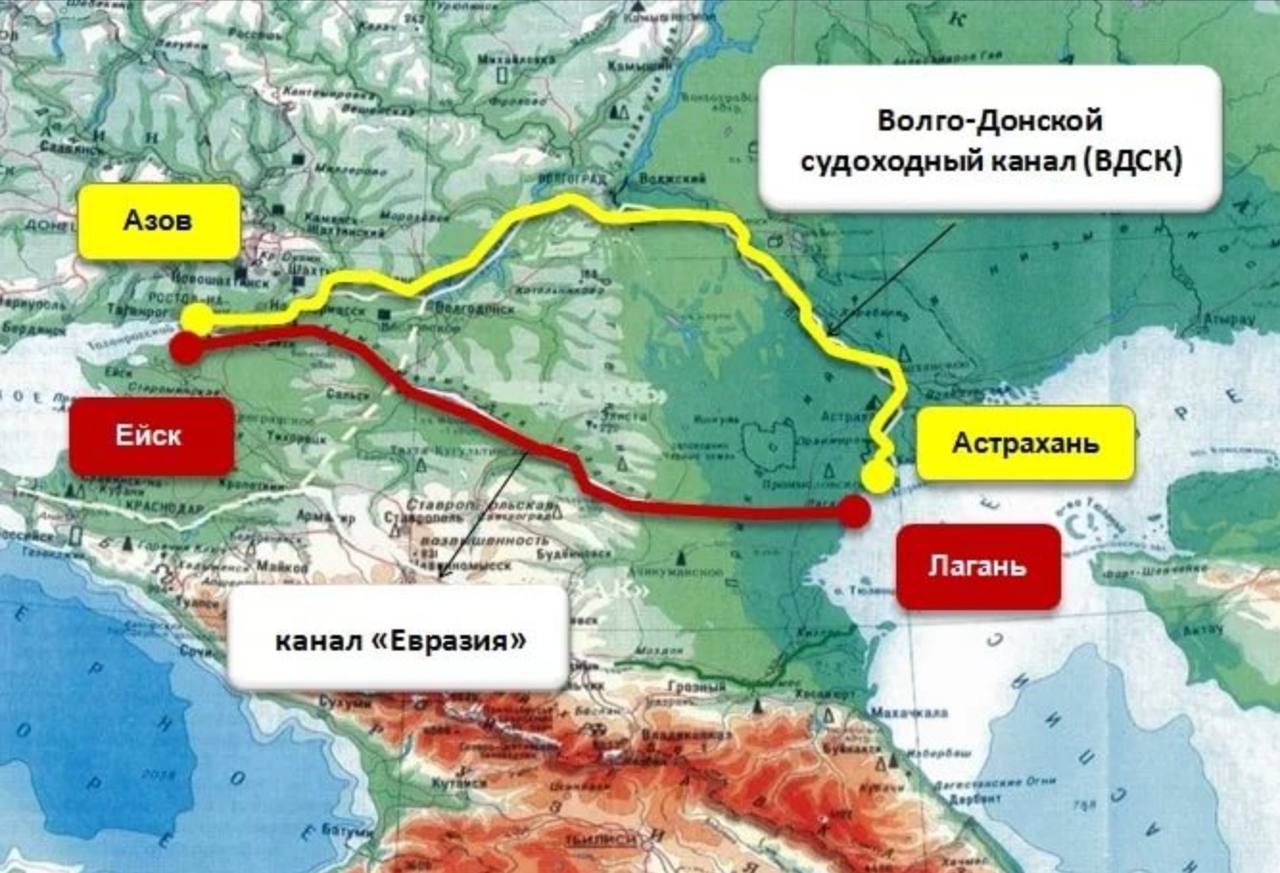
On 12 September 2000, during the second Euro-Asian Transport Conference in St Petersburg, Russia, India and Iran signed an intergovernmental agreement to create the International North–South Transport Corridor (the red line on the map). Oman, Azerbaijan, Armenia, Belarus, Kazakhstan, Syria, Türkiye, Tajikistan and Kyrgyzstan later joined.
The International North–South Transport Corridor (INSTC) is an ambitious project to build a multimodal passenger and freight route from the seaport of St Petersburg to Mumbai, one of the largest ports on India’s west coast; its total length is 7,200 km. Its main advantages are that it halves the distance of carriage, cuts transit time by 40% and reduces transport costs by 30% compared with the international sea route through the Suez Canal (the green line on the map), which is 14,500 km long.
Beyond these advantages, the corridor gives Russia access to the large, fast-growing markets of Iran, India, Pakistan, South-East Asia, Africa and the Middle East, and gives India and Iran access to the markets of Russia, Northern and Western Europe via the Baltic Sea, and of Central Asia via the corridor’s eastern route. Iran becomes the key country in the corridor, since all these routes will pass through it.
The corridor also creates an alternative to the Suez Canal, which in 2020 carried about 12% of the world’s freight traffic — down on 2019 because of the pandemic. Some 19,000 ships a year passed through the Suez Canal, against more than 14,000 a year through the Panama Canal, another of the world’s most important waterways. In 2022 the Suez Canal set an all-time record for cargo traffic, with more than 23,000 ships carrying 1.4 billion tonnes of goods. In 2024, however, Egypt’s revenue from the Suez Canal fell by almost half after Houthi attacks on ships in the Red Sea.
INSTC: North–South
The International North–South Transport Corridor (INSTC) provides for three main freight routes relative to the Caspian Sea:
▪️The Trans-Caspian route: through the ports of Astrakhan, Olya and Makhachkala in Russia and the ports of Bandar Anzali, Amirabad and Nowshahr in Iran.
▪️The eastern route:
-
an existing railway line through Karakalpakstan runs across Kazakhstan, Uzbekistan and Turkmenistan and connects to Iran’s rail network at the Tedzhen–Sarakhs border crossing, with bogies changed from the Russian 1,520 mm gauge to the 1,435 mm European gauge used in Iran at a station in Turkmenistan;
-
an existing railway line through the Bolashak station, bypassing Uzbekistan directly from western Kazakhstan into Turkmenistan, reaches Iran at the Etrek–Gorgan border crossing, with wheelsets changed at the Gorgan border crossing in Iran.
▪️The western route: Astrakhan–Makhachkala–Samur, then across Azerbaijan to the Astara station and across Iran along the Astara–Rasht–Qazvin line under construction. The Astara (Azerbaijan)–Astara (Iran) and Rasht–Qazvin railway sections in Iran have been commissioned. As for the Rasht–Astara section, on 17 May 2023 Russia and Iran signed an intergovernmental agreement to build this 162 km stretch, which is planned for completion by 2027. On the INSTC’s western route, once the Rasht–Astara line is finished, trains from Russia will run through Azerbaijan and Iran to the Iranian port of Bandar Abbas, and then by sea to the Indian port city of Mumbai.
According to forecasts, once the Rasht–Astara railway opens, transit volumes on the INSTC’s western route could rise to 30 million tonnes, while total freight traffic along all the routes — Trans-Caspian, eastern and western — should grow from 15 million to 45 million tonnes by 2030. Beyond India, trade routes may later be extended to Iraq, Kuwait, Qatar, the UAE, Saudi Arabia, Oman, Yemen and Sri Lanka. The INSTC will eventually cover the countries of Africa, South-East Asia and Oceania.