









Britain has put an end to coal power. What does it mean for its industry?
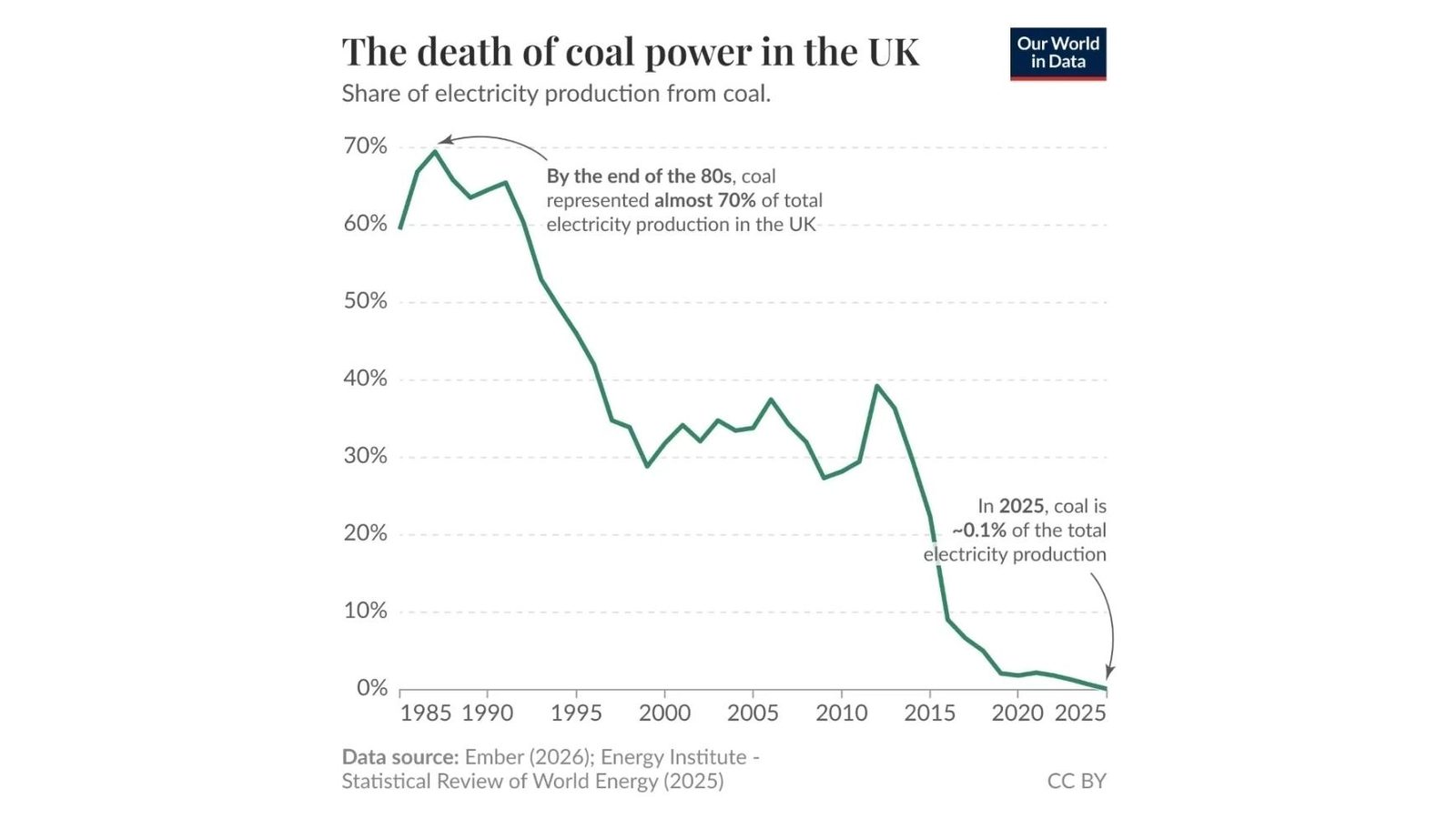
In the late 1980s coal produced about 70% of Britain's electricity. It is now the first G7 country to abandon coal generation, which raises hard questions for its industry.
Britain has put an end to coal power. What does it mean for its industry?
In the late 1980s, about 70% of Britain’s electricity was produced at coal-fired power stations. Today the country has become the first in the G7 to abandon coal-fired generation entirely, as it shifts to low-carbon energy and seeks to cut carbon dioxide emissions.
The last deep coal mine, Kellingley in North Yorkshire, closed in December 2015. The country’s last coal-fired power station, Ratcliffe-on-Soar, closed officially in September 2024.
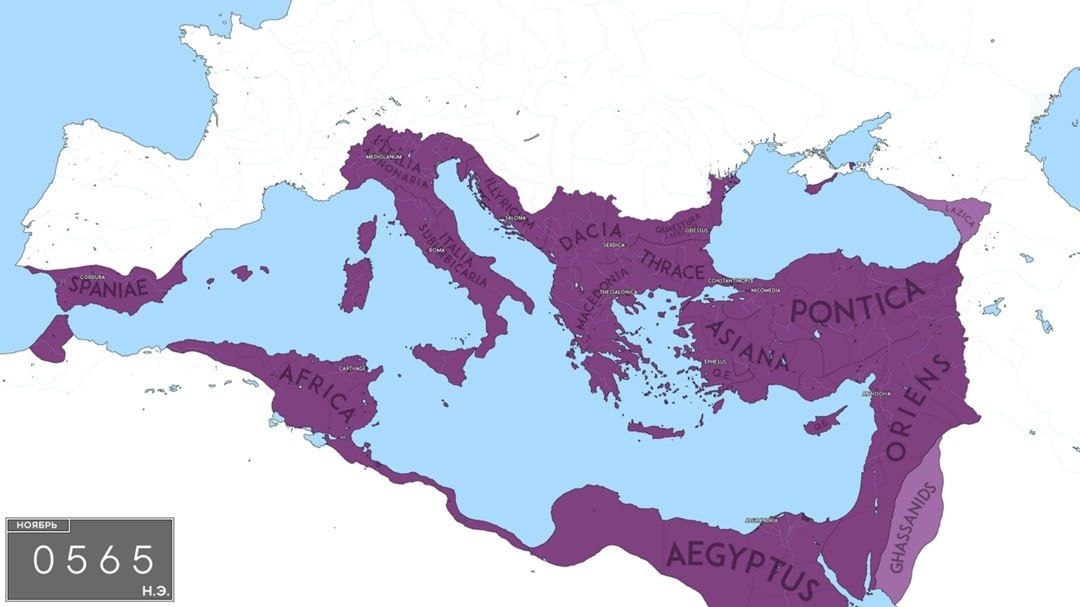
Britain, once the greatest empire of the early 20th century and the birthplace of the Industrial Revolution in the second half of the 18th century, with the invention of the steam engine and new technologies in textile production, today faces serious structural problems in energy and industry.
Historically, the peak of Britain’s global economic power is usually dated to the 1870s. At that time no country could compete with Britain, because world industrial hegemony was hers. Britain could dictate terms to other states.
In those years Britain held a huge share of world output of coal, cotton cloth and pig iron. Cheap coal, which had replaced charcoal as early as the 18th century, was the energy source behind the Industrial Revolution in Britain.
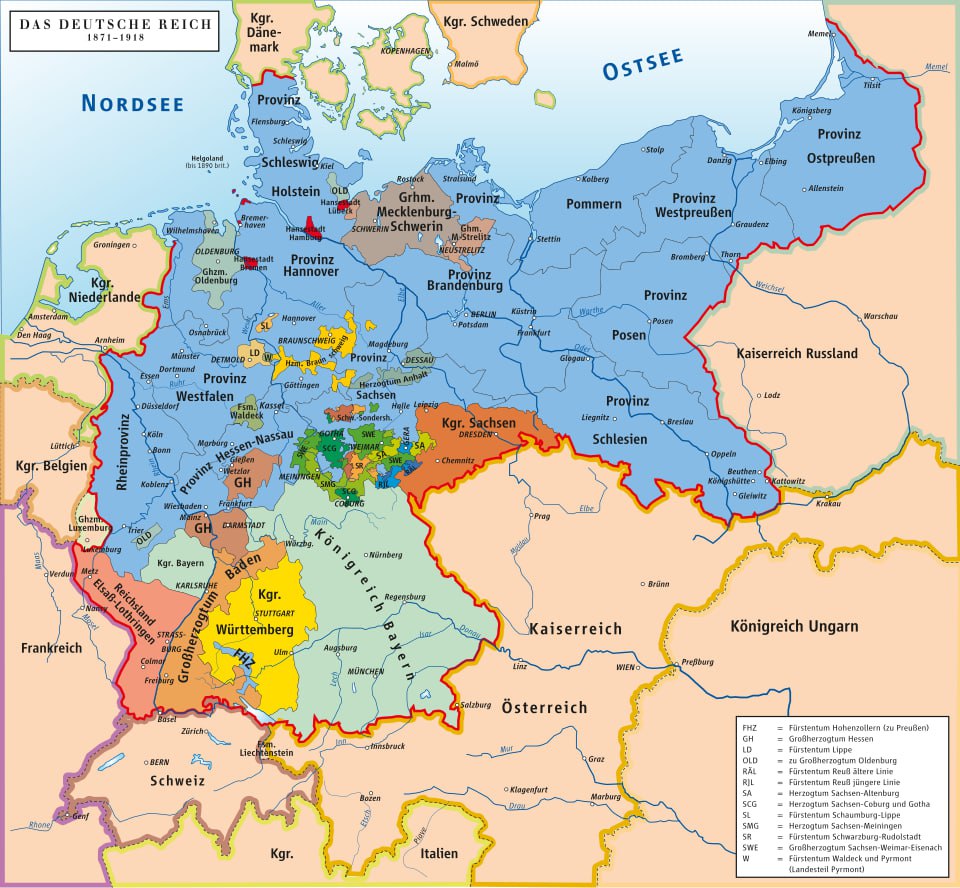
Yet already in the last quarter of the 19th century Britain’s industrial lead began to shrink, and the world system moved towards a more complex multipolar structure amid the rapid rise of the United States and Germany.
According to Volume VII of “World History” (p. 46), if in 1870 Britain produced 32% of world output, the United States 23%, Germany 13 and France 10, then by 1900 the balance looked completely different: the United States 31%, Britain 18, Germany 16, France 7.
Thus over three decades the centre of world industrial power shifted markedly. This reflected not only the end of Britain’s former industrial monopoly, but also its loss of first place in world industrial output to the United States.
Britain nevertheless retained its lead in world intermediary trade, insurance and banking, and kept its colonial and naval hegemony, even as it gradually lost its position as the workshop of the world in the 1870s (World History, Volume VII, pp. 46, 51).
Today, more than 120 years later, manufacturing’s share of Britain’s GDP has fallen to 8% in 2025 from 17% in 1990, whereas China’s share on the same measure was 25% in 2025, the United States 10% in 2024, India 13% in 2025 and Russia 14% in 2025 (rising since 2013).
It should be stressed that a high share of manufacturing in GDP reflects the significant role of material production in a country’s economy and makes it possible to judge its industrial structure. A falling manufacturing share is one indicator of Britain’s long deindustrialisation and its structural shift towards services.
Today household electricity prices in Britain are among the highest of the large developed economies, at $0.42 per kWh ($0.447 for business), against $0.20 (20 cents) in the United States, $0.079 in China, $0.071 in India and $0.078 in Russia as of December 2025. The average retail price of 1 kWh for households in the EU stood at about €0.289 in 2025.
The EU is also phasing out coal, and coal’s share there hit a new historic low of 9.2% in 2025. That phase-out is happening against a backdrop of high electricity prices for end consumers. But correlation alone does not mean that moving away from coal is the cause of those high prices.
At the same time, large countries such as the United States, China and India, where electricity is cheap enough for households and industry, are in no hurry to give up coal. They keep coal within a diversified energy mix while rapidly expanding other sources of generation.
Coal still accounts for roughly 55–58% of total electricity generation in China, despite huge investment in renewables; about 15% in the United States (coal generation is gradually falling as old plants are retired, while gas grows quickly); 71–75% in India; and 15–19% in Russia.
In 2025 China commissioned 78.1 GW of new coal capacity, the most in a decade, while India added 10 GW. Yet despite that large build-out, actual coal-fired generation in China and India fell in 2025 for the first time in decades, by 1.5% and 3% respectively, on the back of record growth in renewables (solar and wind).
New coal capacity in China and India serves to keep the power system reliable and flexible and to meet rising demand as variable solar and wind generation grows quickly. The construction of new coal plants should therefore be seen as one instrument for keeping the system reliable and balanced, not as an outright rejection of the energy transition. It is also important to look at installed capacity, actual output and coal’s share of the energy mix in these large countries at the same time.
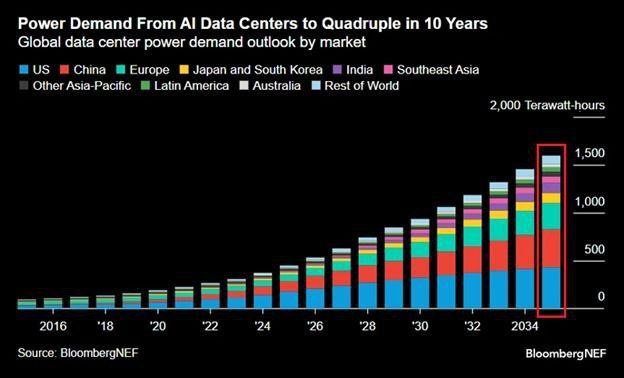
In addition, affordable and reliable electricity in sufficient volume is needed not only for industry but also for AI, whose computing infrastructure requires ever more power, above all to run computing systems and cool data centres.
AI infrastructure needs a stable, scalable power supply. Variable solar and wind generation alone cannot guarantee round-the-clock supply, so it has to be complemented by storage, backup generation, nuclear power, demand management and grid development.
The scale of future demand is well illustrated by the build-out of AI infrastructure. Under its Stargate programme, OpenAI has announced a large-scale expansion of computing infrastructure and generating capacity. In April 2026 the company reported that it had exceeded its initial target of 10 GW of AI infrastructure in the United States by 2029.
British industry is not growing. On the contrary, according to the British government, industrial energy consumption fell by a further 4.9% in 2025 to 17.3 million tonnes of oil equivalent, the lowest in the entire relevant statistical series. Industrial output, meanwhile, fell by just 0.2% in 2025.
That does not mean future electricity demand will fall. The government is counting on reindustrialisation, advanced manufacturing, the digital economy and the electrification of industry under its ten-year Modern Industrial Strategy. It also expects electricity demand to more than double by 2050.
Against this background, the question for Britain is not only what to replace coal generation with today, but whether its energy system can support future demand growth without losing economic competitiveness.
This is where the central paradox of British energy policy lies: the state is trying at once to speed up decarbonisation, to lower electricity costs for industry, and to restore a stronger manufacturing base to the economy.
Moreover, Britain is historically endowed with very rich coal deposits, which, as I noted above, became the main and cheap source of energy for the Industrial Revolution of the 18th and 19th centuries.
Britain’s remaining coal resources could potentially be seen not only as a fuel but also as a feedstock for synthetic gas, methanol, fertilisers and other chemical products using gasification technologies.
Coal can also yield metallurgical coke and semi-coke for smelting pig iron, steel and ferroalloys, as well as synthetic liquid fuels (motor fuel and synthetic oil).
Such technologies could potentially support parts of the chemical and metallurgical industries and reduce dependence on imports of certain raw materials and energy carriers. More broadly, they could become one element of Britain’s industrial policy.
The economic viability of such technologies, however, depends on the cost of coal extraction, capital expenditure, the efficiency of gasification and synthesis, the cost of CO₂ capture and purification technologies, and current carbon regulation.
The central question of the 21st century is no longer which energy source is the right one, but whether an energy system can at once deliver affordable prices, secure supply and the scale that industry, transport and the digital economy require.