















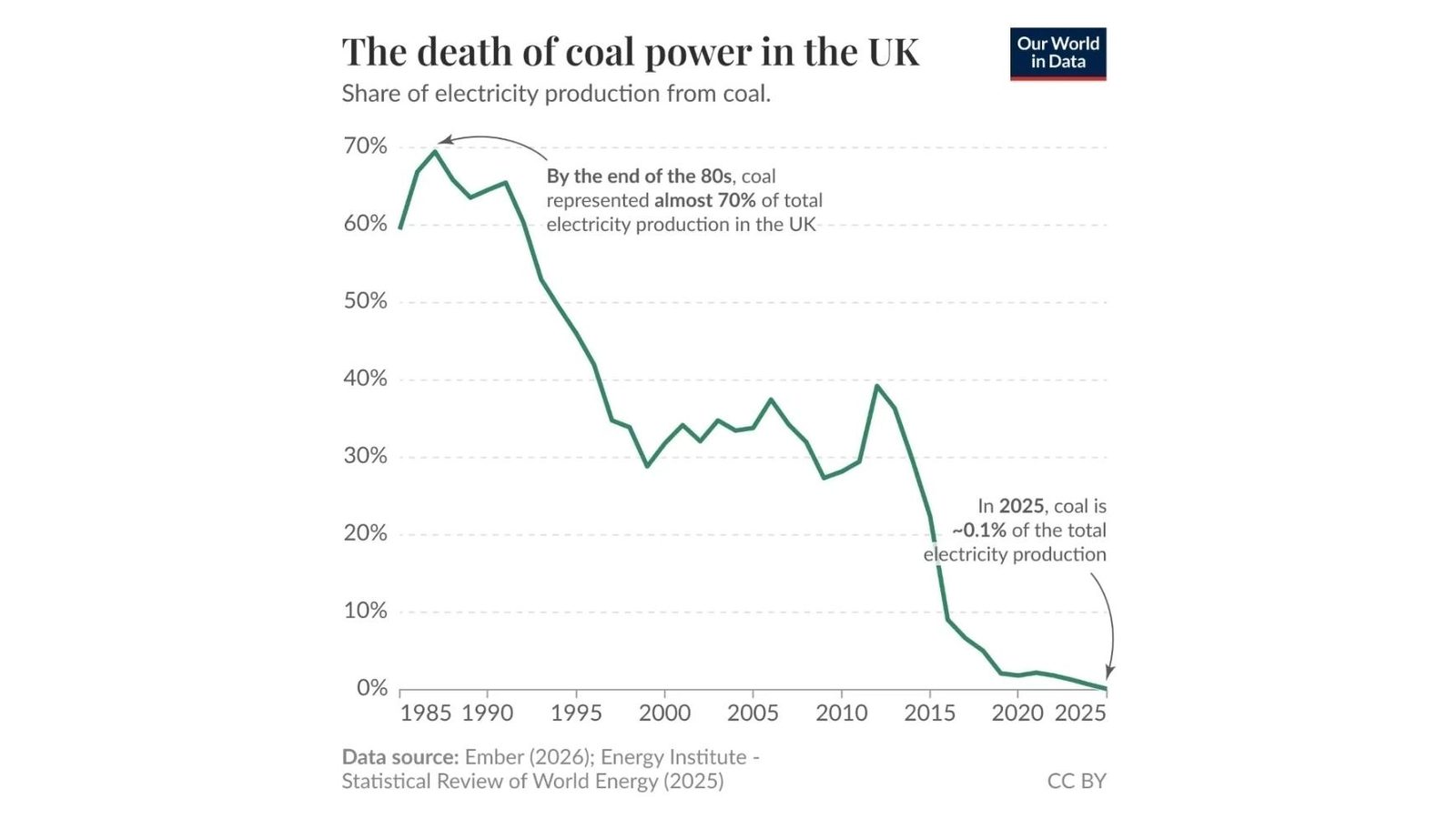
Britain has put an end to coal power. What does it mean for its industry?
In the late 1980s coal produced about 70% of Britain's electricity. It is now the first G7 country to abandon coal generation, which raises hard questions for its industry.
In the late 1980s coal produced about 70% of Britain's electricity. It is now the first G7 country to abandon coal generation, which raises hard questions for its industry.
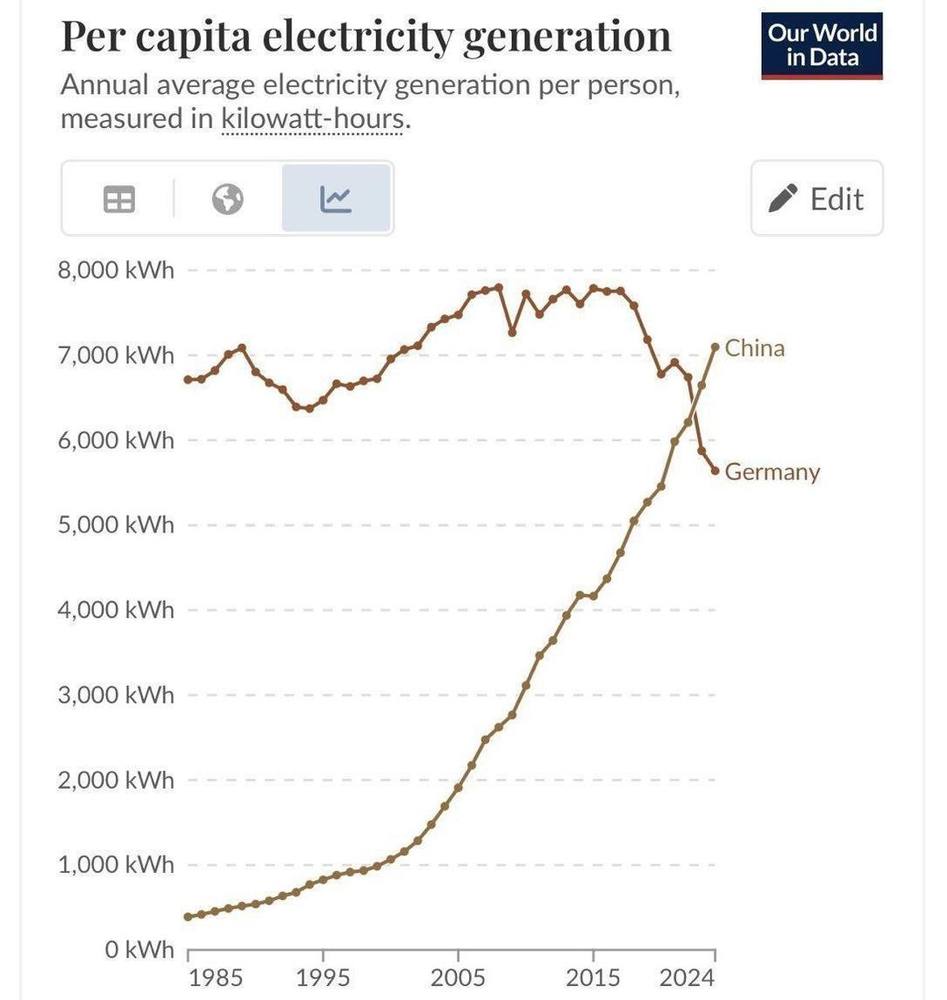
Germany's electricity generation per capita falls year after year, while China's has risen continuously for at least three decades — a sign of where industrial capacity is heading.
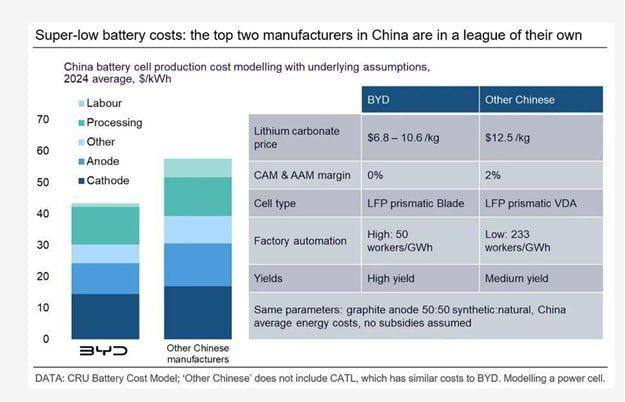
The author's case for why Chinese manufacturers dominate the global solar panel and battery sectors: long-term state industrial strategy, subsidies, self-sufficiency in minerals, scale, automation and cheap electricity.
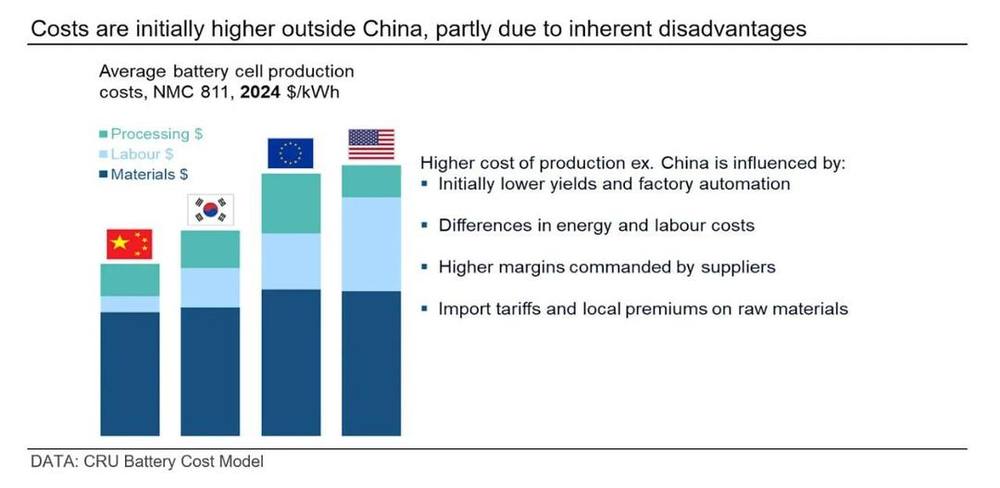
The chart compares the average cost of producing battery cells in China, South Korea, the European Union and the United States, and shows why the US and the EU lag behind China.
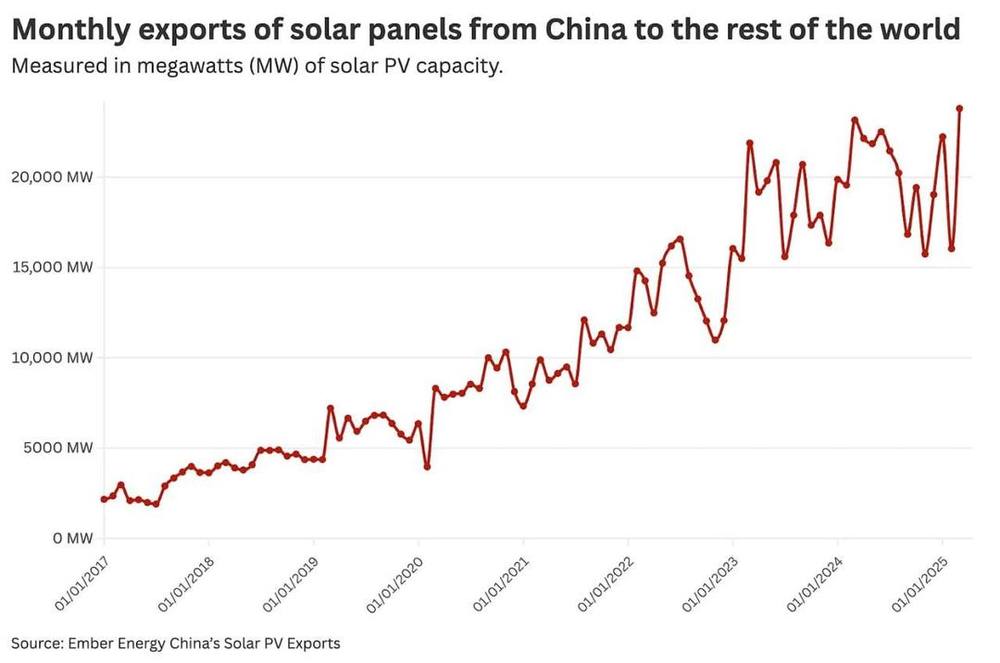
China's monthly exports of solar panels to the rest of the world, measured in megawatts (MW). Chinese panels are far cheaper than those made elsewhere, and China also produces three-quarters of the world's batteries.
US President Donald Trump says Germany went so green that it nearly went bankrupt.
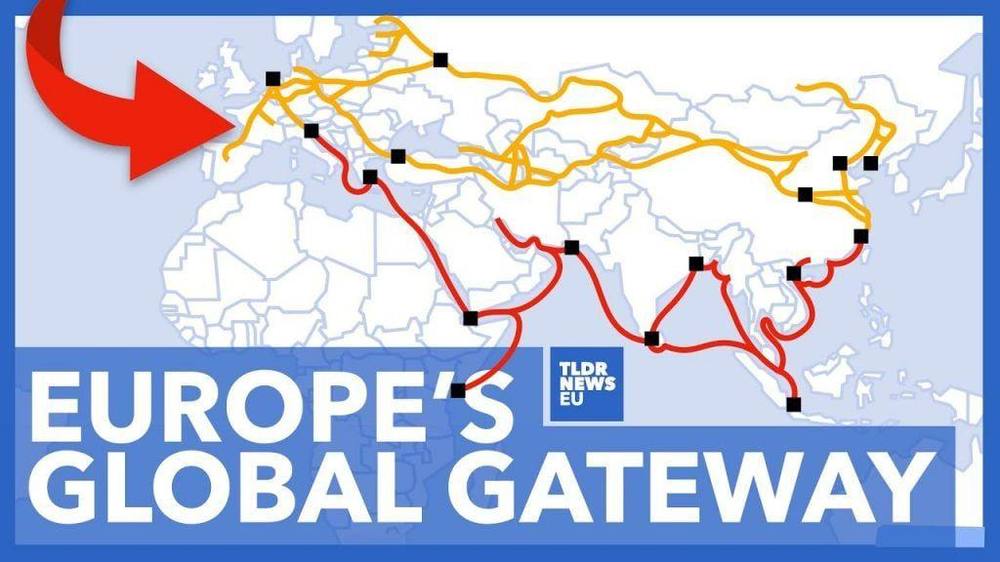
The European Union's Global Gateway strategy aims to speed up digital, energy and environmental transformation in emerging and developing economies, mobilising €300 billion of investment by 2027.
After Germany abandoned its nuclear programme and closed its plants, German imports of nuclear-generated electricity hit a record in 2024.
In response to the 10% tariffs the United States imposed on imports from China, Beijing introduced additional duties of 15% on US coal and liquefied natural gas (LNG), and 10% on American oil, agricultural machinery, large-engine cars and pickups.
According to the IEA, 83% of the coal mined worldwide is consumed in the Asia-Pacific region, with China alone accounting for more than half of global consumption. India and Indonesia are also increasing their use of coal year after year.
The United States has the world's oldest coal-fired power plants, with an average age set to pass 50 next year, and its 92 nuclear reactors are the third oldest globally. Yet while others build ultra-supercritical coal units, the US is closing its coal plants and switching to gas.
World energy demand will double, driven by the growth of the Global South, the transformation of energy sources and the exponential rise of artificial intelligence.
On 27 May 2024 Russia and Uzbekistan signed a contract for a six-unit small nuclear power plant in the Jizzakh region. The first reactor is due to start up within five years, with full commissioning no earlier than 2033.
According to the US Department of Energy, the United States is the world's largest crude oil producer, pumping almost 13 million barrels a day. This article looks at Texas, the country's energy heartland and second most populous state.
India has enormous long-term potential for industrial development. Nearly half its working population is still employed in agriculture, and mechanisation will push that labour into the cities and into industry.
Saudi Arabia ranks 16th by GDP (PPP), and its oil wealth is managed by the state giant Saudi Aramco. The non-oil economy is now growing fast, even as hydrocarbons stay central to modern manufacturing.
Japan's Sixth Energy Plan targets 38% renewables and 20% nuclear by 2030, while coal and gas lose ground. Yet total power generation has been falling since 2010.
India is the world's most populous country and its third-largest economy, yet coal still provides more than 80% of its electricity. This chart breaks down Indian power generation by source.