















The Global Gateway strategy of the European Union
The European Union's Global Gateway strategy aims to speed up digital, energy and environmental transformation in emerging and developing economies, mobilising €300 billion of investment by 2027.
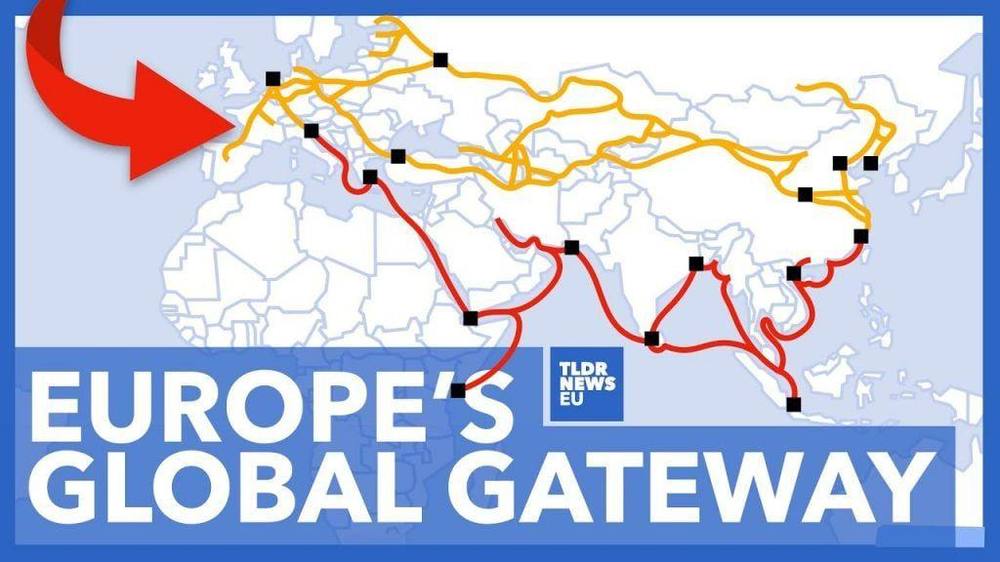
The Global Gateway strategy is a European Union strategy designed to accelerate digital, energy and environmental transformation in fast-growing and developing economies, with an emphasis on mobilising private capital.
It can be seen as an EU strategy for preserving the bloc’s global strategic independence and competitiveness, and as an answer to the global strategies of other powers, including China’s Belt and Road Initiative in Eurasia. For the West, for example, the Middle Corridor is part of the Global Gateway project, which is meant to break China’s Belt and Road Initiative monopoly on world trade.
Under this strategy the EU plans to mobilise €300 billion by 2027 to support financing for sustainable, high-quality infrastructure worldwide that meets social and environmental standards.
Africa is to receive €150 billion; the remaining funds will go to the Western Balkans, Ukraine, Asia, Latin America and the Caribbean.
The strategy focuses on five priority areas:
-
digital technology (access to digital infrastructure, a protective regulatory framework, skills development);
-
climate and energy (renewable energy and the management of critical minerals, sustainable agri-food systems, water supply and sanitation, waste management, ecosystem conservation);
-
transport (rail, road, port and airport networks, logistics hubs and multimodal platforms, regulatory agreements and convergence of standards);
-
healthcare (security of pharmaceutical supply chains, development of local manufacturing capacity);
-
education and research (access to quality education and vocational training, and the creation of academic and research networks).