








“Grief can become a garden of compassion. If you keep your heart open to everything, your pain can become your greatest ally in the search for love and wisdom in your life”;
“Every person is created for some particular work, and the desire for that work is placed in every heart”;
“If you ever fall into great trouble, do not turn to the Almighty with the words: ‘O Almighty, I am in great trouble.’ Say to the trouble: ‘I have the Great Almighty.’”;
“For a long time I sought God among the Christians, but He was not on the cross. I visited a Hindu temple and an ancient Buddhist monastery, but even there I found not a trace of Him. I went to the Kaaba, but God was not there either. Then I looked into my own heart. And only there did I behold the God who was nowhere else…”;
“Will you, who are always full, ever understand what need does to people?”;
“Sew up your eyes, and let the heart become the eye”.
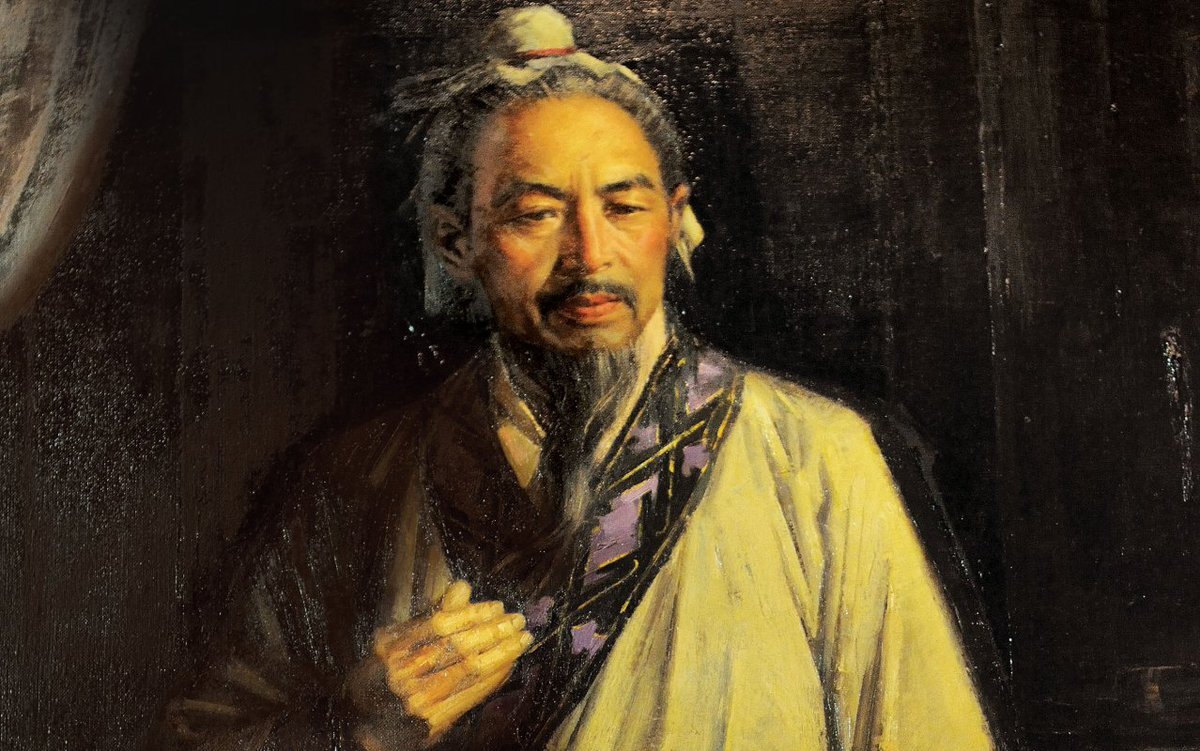
(Maulana Jalal al-Din Muhammad Rumi (1207–1273) was an outstanding Persian poet and Sufi, an Islamic theologian and legal scholar.)
In his name, “Maulana” is of Arabic origin and means “our master”, while Jalal al-Din is an Arabic byname meaning “Glory of the Faith”. He is also called Maulana Jalal al-Din Muhammad Balkhi. Balkhi and Rumi mean “from Balkh” and “from Rum”. Rum refers to the Anatolian peninsula.
Jalal al-Din Rumi was born in the town of Vakhsh, in the territory of present-day Tajikistan, into the family of a court scholar, theologian-jurist and Sufi preacher, Muhammad ibn Husayn al-Khatibi al-Balkhi, known as Baha al-Din Walad, who is considered a descendant of the first caliph Abu Bakr. Baha al-Din Walad was forced to flee his native city under the threat of the Mongol invasion and settled in Asia Minor (Rum, the Anatolian peninsula).
Jalal al-Din received an education not only in theology and law but also in the exact sciences. He knew Arabic and Greek well, as well as the Quran and its commentaries. Rumi later became the inspiration for the Mevlevi dervish Sufi order, which was founded after his death by his elder son Sultan Walad, himself one of the outstanding Persian Sufi poets. The purpose of founding the Mevlevi order was to preserve, within certain bounds, the ideas, customs and rituals established by Rumi. The Mevlevi tariqa was the most influential among the aristocrats of the Ottoman Empire in Türkiye.
Sultan Walad was of one mind with his father Rumi to the last days of his life, supported his ideas and accompanied him on his travels. Even on the night of his father’s death he was at his bedside and did not sleep. Rumi’s last poem, “Go, lie down to sleep, only leave me alone…”, is the thinker’s address to his elder son, Sultan Walad, according to Aflaki.
Today Rumi’s influence extends beyond national borders and ethnic differences. His poems have been translated into many of the world’s languages. Rumi’s works are written mainly in Persian, but in his poetry he sometimes also used Turkic, Arabic and Greek. His poem the Masnavi (couplets), composed in the city of Konya (Türkiye) and comprising about 50,000 verses, is a grand epic-didactic work accompanied by moral instruction and amounts to an encyclopedia of Sufism. The Masnavi is one of the most revered, greatest and most widely read books of the Muslim world.
Translations of his works are very popular around the world, especially in Iran, Türkiye, Azerbaijan, the United States, Central Asia and South Asia. His poetry influenced not only Persian literature but also the literary traditions of Ottoman Turkish, Chagatai, Urdu and Pashto. Rumi has been described as the “most popular poet” and the “best-selling poet in the United States”.