




The Wakhan Corridor in Afghanistan
The Wakhan Corridor is a narrow strip of land in the Wakhan region of Badakhshan Province in eastern Afghanistan.
The Wakhan Corridor in Afghanistan
The Wakhan Corridor is a narrow strip of land in the Wakhan region of Badakhshan Province in eastern Afghanistan. It is a harsh high-mountain area about 295 km long and between 15 and 57 km wide, lying in the valleys of the Panj, Wakhan and Pyandzh rivers. Under an 1895 treaty between the British and Russian empires, the Wakhan Corridor was to be handed to sovereign Afghanistan, which became a buffer between Russian Central Asia and British India. The treaty settled all outstanding territorial questions between the two great powers in the Pamirs and defined their spheres of influence in that part of Central Asia.
In its day the most difficult stretch of the Great Silk Road ran through the Wakhan Corridor. Marco Polo — the famous Venetian merchant and traveller who wrote The Description of the World (known in English as The Travels of Marco Polo) after his journey through Asia (1254–1324) — described the corridor in that work, having crossed it on his way to the court of the Chinese emperor. The Silk Road’s importance later declined gradually with the Age of Discovery, which began in the 15th century in search of alternative trade routes to India and continued into the 18th, as Europeans opened up new lands and sea routes to Africa, the Americas, Asia and Oceania in search of goods much in demand in Europe (spices and other wares), as well as gold and silver.
On 10 January 1955 Afghanistan and China established diplomatic relations, and on 22 November 1963 they signed the Afghan–Chinese border treaty, which marked the full 92.45 km line of the Afghan–Chinese border and seven passes higher than 4,800 m leading from Chinese territory into the Wakhan Corridor. These are the Tegermansu, Sarik Tash Daban, Mehman Yoli, Kara Jilga, Western Koktorok, Northern Vakhjir Dawan and Southern Vakhjir Dawan passes. The Great Silk Road once ran through the Southern Vakhjir Dawan pass.
In recent times the Taliban government has sought to turn the Wakhan Corridor into a major international transit route connecting not only China and Afghanistan directly but also China, Iran, Türkiye and Europe via Afghanistan. At present there are no modern highways along the Wakhan Corridor; it consists of hard going, with pack animals (horses, donkeys and mules) used between villages. In 2009 China raised the question of opening the corridor between the two countries.
The Wakhan Corridor in Afghanistan
It is worth noting that Afghanistan is a global treasure house of minerals, with the richest deposits of mineral resources, including oil, gas, coal, copper, silver, gold, cobalt, sulphur, lead, zinc, rare-earth elements, iron ore, beryllium ore, rock salt, marble, lapis lazuli, barite, celestine and others.
For example, the Aynak copper deposit near Kabul is considered the largest in Eurasia, with reserves estimated at 13–20 million tonnes. Total copper resources across the country’s explored deposits amount to 60 million tonnes, or 6.7% of proven world copper reserves (according to the analytics firm Statista, proven world copper reserves are estimated at about 890 million tonnes, with annual production of 22 million tonnes; by volume of world metal production and consumption, copper ranks third after iron and aluminium). The Aynak copper deposit is to be developed by the China Metallurgical Group (MCC), which back in 2008 signed a 30-year concession with the Afghan government to develop it, but the project was frozen because of political risks.
The Afghan side is now building a 25-km road to the Aynak copper deposit. Afghanistan has the world’s sixth-largest copper reserves, after Chile, Peru, Australia, Russia and Congo. True, the project involves exploration and mining of copper ore by a Chinese company. Further down the line, high-value processing facilities will be needed, along with plants making finished copper products — and that will require energy and transport infrastructure.
According to Afghanistan’s Ministry of Mines, the country has the richest iron ore reserves: more than 2.2 billion tonnes in total lie beneath its territory. One of the largest deposits is the Hajigak site in Bamyan Province. It is estimated to hold 2.1 billion tonnes of rich iron ore with a high iron content of 63–69%, considered the largest in the South Asian region. The Iranian companies Bakhtar Steel Company, Ahya Sepahan and Persian plan to invest $1.17 billion in partial development of the Afghan iron mine. In addition, in September 2023 the Turkish company Epcol and the Afghan company Afghan Invest signed a contract to mine lead.
Afghanistan is also very rich in lithium, used in lithium-ion batteries for electric vehicles and other devices (see my earlier articles on lithium and lithium-ion batteries worldwide). A 2010 Pentagon report claimed that Afghanistan could become “the Saudi Arabia of lithium”, referring to the very large lithium reserves in the country. According to Afghanistan’s Ministry of Mines and Petroleum, a Chinese company plans to invest $10 billion in developing Afghan lithium (Afghanistan’s lithium reserves are estimated at about $1 trillion).
Chinese companies (the company HK CAPEIC) have begun investing in oil and gas projects in Afghanistan, with Chinese investment currently set to total $540 million over three years. Chinese companies also intend to invest up to $500 million in Afghanistan’s solar power. It should be understood that this is just the start of Chinese investment in the country, and over time China’s investment alone will be measured in tens of billions of dollars a year. By the most modest estimates, the country’s resources are worth $3 trillion.
The Wakhan Corridor in Afghanistan
If the Afghan side and China manage to turn the Wakhan Corridor into an international transit route by building trunk roads and railways in the area, it would bring enormous geo-economic and geopolitical advantages to the parties:
First, Afghanistan is an untouched and very resource-rich country, as noted above. China wants to penetrate it effectively and deeply in order to develop and control its rich copper, lithium, oil and gas and other mineral deposits, all the more so since the Afghan side is prepared to make many concessions in favour of the Chinese and Chinese investment in its economy. These resources are needed for China’s continued economic prosperity. Building a fully fledged transport corridor in the Wakhan area would allow China to achieve these geo-economic goals. The Wakhan Corridor provides access to these riches by directly connecting Afghanistan and China. Implementation of the project depends on China.
Second, the corridor could become an alternative route — or a competitor — to the transit and trade routes that currently begin in China and run through Kazakhstan, Uzbekistan and Turkmenistan towards Azerbaijan, Iran, Türkiye and Europe. If the Wakhan Corridor is opened, Afghanistan becomes a transit country, earning very large sums from it. Iran and Tajikistan are also interested. Tajikistan, too, would gain an alternative route towards Iran through the corridor, giving it access to the markets of the Middle East and Europe while bypassing Uzbekistan and Turkmenistan.
The fourth section, “Ruzanak–Herat”, of the Herat–Khaf railway project (Khaf is an Iranian city) is currently under construction. The roughly 225-km cross-border Khaf–Herat railway links eastern Iran with western Afghanistan. Apart from the fourth section now being built, “Ruzanak–Herat”, the Herat–Khaf line already carries freight and passengers to Iran and back. Preparations are also under way to extend the Herat–Turgundi railway line (Turgundi is a border town in the north of Herat Province in Afghanistan, on the left bank of the Kushk river on the border with Turkmenistan). The Khaf–Herat railway will run to the Iranian port of Chabahar in south-eastern Iran and will let Afghanistan improve its trade and transit goods by connecting with Iran, the countries of Central Asia, Russia, Türkiye and Europe, as well as South-East Asia. The Herat–Khaf railway will link up with the International North–South Transport Corridor (INSTC), which Russia, Iran, India, Azerbaijan and other Central Asian countries are building through Iran, with access to European markets in the north (Russia) and to the markets of Africa, India and South-East Asia in the south. In time, railways through the Wakhan Corridor — if they are built — could connect with the Herat–Khaf line.
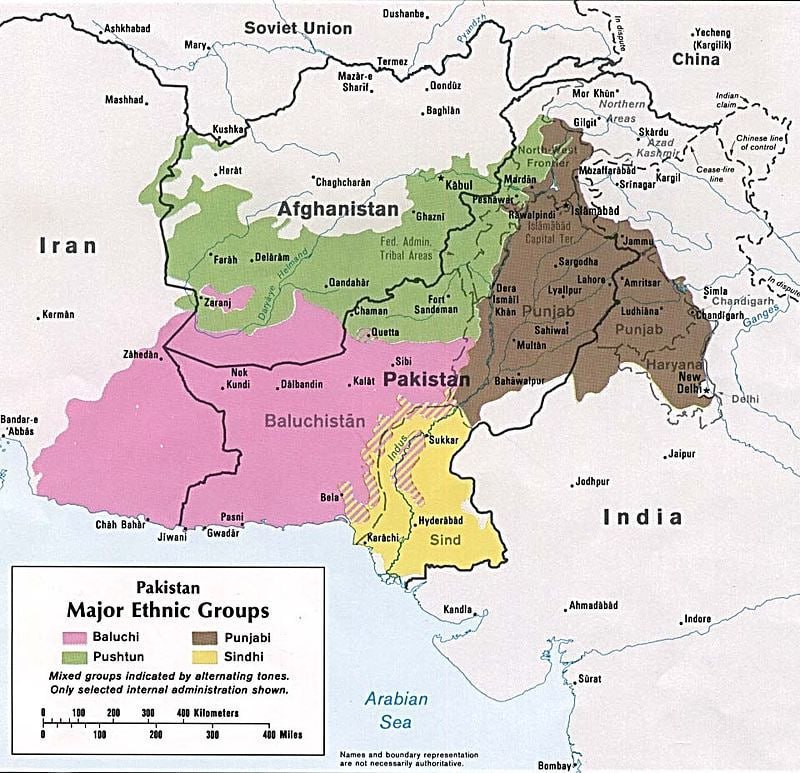
Third, Afghanistan gains direct access to Chinese markets through the Wakhan Corridor. Opening the corridor would sharply reduce its dependence on Pakistan as a transit country between China and Afghanistan.