


R. Kjellén's doctrine of the 'anatomy of state power' and the 'great powers'
Rudolf Kjellén (1864–1922) was a Swedish geographer and political figure who considered himself a pupil of Friedrich Ratzel. His doctrine treated the state as a living organism and defined the great powers by three spatial factors.
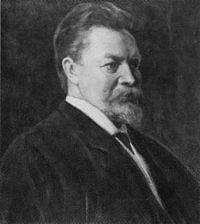
Rudolf Kjellén (1864–1922) was a Swedish geographer and political figure who considered himself a pupil of F. Ratzel (I examined Ratzel’s ideas in the previous piece on geopolitics) and was a Germanophile. After encountering Ratzel’s ideas his worldview came to rest on social Darwinism, according to which the biological principles of natural selection, the struggle for existence and the survival of the fittest are the determining factors of social life.
Kjellén is credited with the term “geopolitics” and with authorship of the first model of a “continental bloc” — the “axis states” — an alliance of small European countries led by Germany. In his main work, “The State as a Form of Life” (1916), he developed the concept of the “anatomy of state power”. For Kjellén, the state is a geographical and biological organism with a complex structure that develops in space. As a geographical organism the state has not only a “body” in the form of space but also a “soul”, represented by the nation. As a biological organism the state possesses a particular kind of “mind” and is endowed with a will to power, rising above individuals and incorporating them. As a living organism the state strives for constant expansion, and to that end it must wage a struggle for existence, whose success depends on its power.
Kjellén defined state power through the following attributes: 1) the state as a people; 2) the state as a society; 3) the state as geographical space; 4) the state as a household (its economy and economic policy, raw materials, colonisation, including new sources of raw materials and markets); 5) the state as government (the constitutional and administrative structures of state power, which define the limits of its authority over individual freedom).
According to Kjellén, state power is a more important factor in maintaining a state’s existence than law. In his view, the optimal form of state governance is autarky — a closed, self-sufficient and self-providing political and economic system with minimal dependence on exchange with the external environment, oriented inward, towards itself, and presupposing absolute sovereignty. Under such governance the state fully controls the economy and seeks to meet all the needs of its citizens. This thesis of Kjellén’s is contentious, because autarky, as a closed system, more often than not acts as a brake on development, makes a country’s economy unreceptive to the scientific and technological progress taking place in other regions and countries, and leads to backwardness — although at an early stage of development some autarky may still be needed to create, develop and strengthen one’s own industries, since in an open economy transnational corporations begin to absorb local weak companies, destroying them.
He saw Germany as the only genuine defender against the “destructive liberal-cosmopolitan forces” represented by Britain and France. Kjellén considered war an instrument of human progress, since war removes ageing and sick nations and cultivates vitality and strength within the warring countries. This idea too is contentious, since wars as a rule kill off the most productive part of a nation; consequently there is no renewal of society, and it takes decades to restore the nation.
For Kjellén, states are, like people, sentient and thinking beings. He therefore concludes that the purpose and essence of every organism lies in the struggle for existence, and that states too must develop in accordance with the rules of the “struggle for existence”.
Kjellén wrote: “They (states) likewise exist on the surface of the earth thanks to their own life force and a favourable combination of circumstances, being in a state of constant competition with one another — that is, a struggle for existence — and thanks to natural selection. We see them being born and growing up; we also see them, like other organisms, withering and dying. So they are forms of life, the most imposing of all life forms on earth” (G. Heyden, “Critique of German Geopolitics”).
For him the struggle for existence is a struggle for space. And large states expand their space at the expense of small countries. The viability of a state whose space is limited is subject to the imperative of expanding its territory through colonisation, unification or conquest of various kinds. In his view, England was in that position, and Japan and Germany were then in it (after the First World War. He can be said to have predicted the cause of the Second World War). Kjellén has in mind the natural and necessary growth of the state for the sake of self-preservation.
Kjellén says that wars are waged to give surplus populations work and bread, and that the governments of strong states have no free choice. In other words, wars accompany the growth of the state organism, and people are powerless before these facts. The struggle for space for the development of the state organism is subject to the eternal laws of nature.
With the “inevitable growth of the state”, things go badly for small countries and peoples, and “small states… are either pushed to the periphery, or preserved in border areas, or disappear. And the concepts of justice and injustice must not be applied here” (G. Heyden, “Critique of German Geopolitics”). In his view, a politician or statesman is free only to pave the way for this natural necessity, and no one has the right to condemn him.
In his book “The Great Powers” (1910), Kjellén advanced the concept of “young” and “old” peoples. He considered the Russians and Germans “young peoples” and the French and English “old”. The “young” Germans must take possession of the Central European space and create a continental state of planetary scale, pushing back the “old” peoples, otherwise Germany could not survive the struggle with geopolitical forces such as Russia, Britain and the US. To that end the peoples of Central Europe must form a union whose axis would be Germany, since its geographical position would force it to defend the main interests of all Europe. Like Ratzel, he believed that Germany’s interests were identical with those of the neighbouring states of Europe but opposed to the interests of France and England.
In the above-mentioned work Kjellén created the concept of the “great powers”. He believed that the main subject of geopolitics should be the great powers, since they are the most active main players on the geopolitical stage. Kjellén distinguished world powers from great powers. At the time he regarded Britain, the US, Russia and Germany as world powers. Among the great powers he counted France, Japan, the Austro-Hungarian Empire and Italy. Kjellén defined the great powers by “three spatial factors”: expansion of space, territorial cohesion and freedom of movement. Each state therefore has its own balance of these factors, which determine its strategic potential.
Russia, for example, possessed a large territory and territorial cohesion but not freedom of movement, since its access to warm seas was limited. Britain was abundantly endowed with freedom of movement thanks to its oceanic position, its powerful fleet and its dominance of the sea lanes, as well as with vast territorial expansion thanks to its overseas dominions and colonies. But it lacked territorial cohesion. The British Empire was scattered over 24% of the earth’s land surface. In 1914 the British colonies accounted for almost 70% of the colonial population of all the colonial powers. Britain’s weakness was its lack of territorial cohesion.
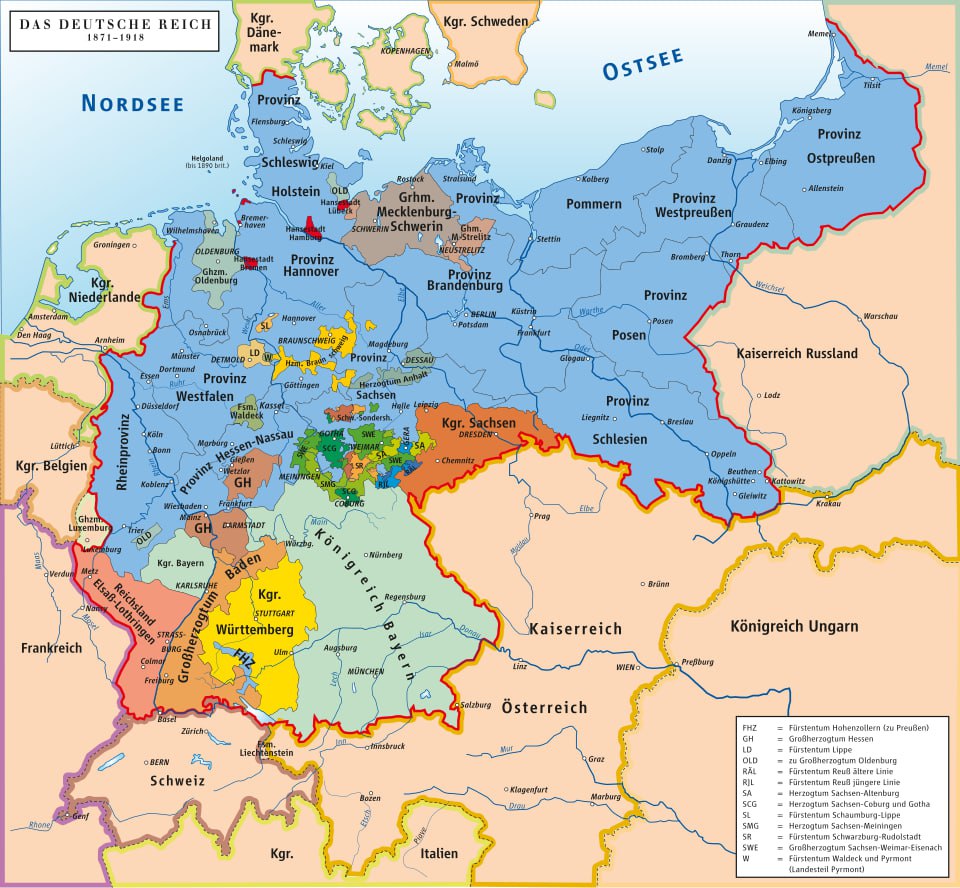
According to Kjellén, Germany possessed neither extended territory nor freedom of movement, since its access to open waters ran through Hamburg and Kiel, yet it did enjoy territorial cohesion and a single ethnic group. The US has the most favourable position on all three spatial factors: it has extensive space, freedom of movement and territorial cohesion. Japan had territorial cohesion and freedom of movement in the Pacific zone, but not extensive territory.
His observations that global change (today called globalisation) erodes the traditional sovereignty of states, above all in the economic sphere, and his opposition to the “liberal-cosmopolitan forces”, remain relevant to this day. Today it is clear that the “multiculturalism policy” pursued in the democratic countries of Europe is generating resentment among the local population and fuelling nationalist tendencies there.