















Muhammad Shaybani Khan, one of the outstanding Uzbek commanders and statesmen in history
The founder of the Shaybanid dynasty and khan of the Bukhara Khanate was one of the outstanding commanders and statesmen of his age. Part 1 traces his education in Bukhara and the ambition he carried back to the steppes; part 2 follows his conquest of Transoxiana, Khorezm and Khorasan.
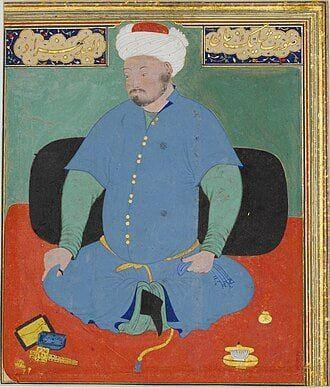
Muhammad Shaybani Khan was the founder of the Shaybanid dynasty and the Uzbek khan of the Bukhara Khanate. He was truly one of the outstanding commanders of his time, a man of political instinct and a broad outlook, highly educated (he spoke Persian and Uzbek, wrote poetry, took an interest in the sciences and philosophy), who loved conversation with poets and scholars and valued it. The political career of this remarkable statesman was filled with hardship in his younger years, then with brilliant political and military successes, and finally with tragedy at the end of his life.
He was a very brave man who liked to strike his opponents with swift, lightning blows; in a sense he resembled the Great Amir Temur and the Turkish sultan Bayezid the Thunderbolt in matters of military tactics and strategy.
The point is that Dasht-i-Kipchak (the Kipchak Steppe), the vast steppe expanse stretching from the Dnieper and the northern shores of the Black Sea to the Irtysh and Lake Balkhash, bordering in the south on Khorezm and the lower reaches of the Syr Darya, formed part of the ulus of Jochi, the eldest son of Genghis Khan. The ulus of Jochi is known as the Blue Horde (Kök Orda) or the Golden Horde.
After the death of Jochi, the eastern part of his ulus, known as the White Horde (Ak Orda), was divided between his sons Orda and Shayban. The lands to the north of the Syr Darya, between the Yaik (Ural), the Irtysh and the Chu rivers, which Muslim authors called Dasht-i-Kipchak, went to Shayban. The lands in the lower reaches of the Syr Darya, with the adjoining districts and the Ulug-Tag and Kuchuk-Tag mountains, passed to Orda.
Shaybani Khan was a descendant of the aforementioned khan Shayban, the fifth son of Jochi. He resembled his grandfather, the Chinggisid Abulkhair Khan, in his political thinking; Abulkhair had managed to subdue the Uzbek tribes of his native Shayban ulus and a number of tribes of the Orda ulus, that is, a vast territory from Siberia to the Syr Darya. Abulkhair Khan held this territory under his rule for 40 years, from 1428 to 1468.
Shaybani and his inseparable brother Mahmud Sultan were raised by their grandfather Abulkhair Khan after they were orphaned in early childhood. After Abulkhair Khan’s death, however, the state that had briefly united the Uzbek, Manghyt and other tribes of Dasht-i-Kipchak fell apart. The brothers had to leave their homeland, as they were threatened by the strongest rivals among the Uzbek sultans who were fighting for power in Dasht-i-Kipchak after Abulkhair Khan’s death. Shaybani and his brother lived for a time in Bukhara under the patronage of the Timurid ruler Ahmad Mirza.
In Bukhara, Shaybani received a brilliant education under the guidance of one of the best reciters of the Quran, Mawlana Muhammad Khitayi. His love of poetry and learning stayed with Shaybani all his life. His acquaintance with literature broadened his political outlook and horizons. Shaybani considered himself indebted for his successes to a quatrain from the poem Iskandar-nama (The History of Alexander the Great) by Ahmad Rumi, which taught him to “dare”.
At this time Shaybani had already conceived the idea of restoring his family’s power in Dasht-i-Kipchak and of conquering the Timurid domains, according to Sufi sources. The Bukhara sheikh Mansur, Shaybani’s mentor, noticed his pupil’s far-reaching designs. According to legend, when at the end of a meal the servant cleared the dishes by folding up the edges of the tablecloth, Sheikh Mansur said to Shaybani: “As the tablecloth is gathered up from the edges, so begin with the edges of the state.”
After leaving Bukhara once his studies were complete, Shaybani went back to his native steppes. From that moment began his persistent and consistent struggle, waged with varying success, to restore the state and unite the Uzbek tribes of Dasht-i-Kipchak under the rule of a single leader, as the heir of his grandfather Abulkhair Khan.
In the course of several years he managed to take the important border fortresses of Sygnak, Arkuk, Uzgend and Otrar, as well as the heavily fortified Sairam and Yasi (near present-day Turkestan). Shaybani Khan then took the city of Turkestan, which became his main base for campaigns into Transoxiana.
These successes sufficiently strengthened his power and position in Dasht-i-Kipchak to allow him to turn his attention to expanding his conquests towards the Timurid domains. He subsequently managed to take the fortress of Tirsak, on the border with the Khorezmian steppe, and also the fortress of Adak between Urgench and Astarabad (now the city of Gorgan in northern Iran, 30 km east of the Caspian Sea coast).
It should be understood that at the time the constant wars among the Timurids had greatly weakened the political power of their state in Transoxiana (the territory between the Amu Darya and the Syr Darya) and Khorasan (the territory beyond the left bank of the Amu Darya, including eastern Iran, Afghanistan and parts of Turkmenistan and Tajikistan), and the ground was practically prepared for Shaybani Khan’s conquest of the Timurid state. And Shaybani understood perfectly the political condition of the Timurid state.
In this connection I would like to quote Arnold Toynbee (1889–1975), the English historian, sociologist, philosopher of history and cultural theorist who studied the rise and fall of 26 civilisations in world history. He said: “There is a pattern: civilisations rise when they are able to respond creatively to the challenges of the world around them. Civilisations decline when they lose that ability.” These words explain perfectly the situation and the consequences of the political fragmentation of the Timurid state after the death of the Great Amir Temur.
Shaybani Khan launched his campaign into Transoxiana after the death of the childless Samarkand sultan Ahmad Mirza, which brought turmoil among the Timurids. After a three-day siege he captured Bukhara; then, in 1501, Shaybani Khan finally took Samarkand (the first time, the occupation of Samarkand had been precarious and he quickly lost it, but the second time he took it for good after a four-month siege. During the siege of Samarkand, the 19-year-old Babur, sultan of Andijan, was engaged in defending Samarkand) and made it his capital. After that he took Tashkent and the Tashkent vilayet after defeating the Mughals.
In 1505, after a fierce ten-month siege, Urgench was taken, the main city of Khorezm, which bordered on Dasht-i-Kipchak. Shaybani Khan undertook the conquest of Khorezm in order to secure himself against attacks by Sultan Husayn Mirza (better known as Husayn Bayqara (1438–1506), ruler of vast territories in Khorasan) and his allies, the warlike Turkmens.
In 1506 Shaybani Khan took the city of Balkh, one of the greatest cities of antiquity, located 20 km north-west of the city of Mazar-i-Sharif and 74 km south of the Amu Darya. In the past Balkh was the centre of the Greco-Bactrian and Kushan empires.
In the spring of 507 Shaybani Khan crossed the Amu Darya with all his forces and began to seize Herat, the magnificent capital of the last brilliant Timurid, Sultan Husayn Mirza. By that time Sultan Husayn Mirza was no longer alive; he had died on 5 May 1506.
The garrison at Herat began to offer resistance, but it was like deliberately “holding back the rushing current of a great river with a handful of damp earth”, and they were routed and the city was taken. With the capture of Herat, the richest and most cultured part of the Timurid domains was in Shaybani Khan’s hands.