

Karl Haushofer's theory of pan-regions and the continental bloc (for those interested in geopolitics and the geopolitical processes unfolding in the world)
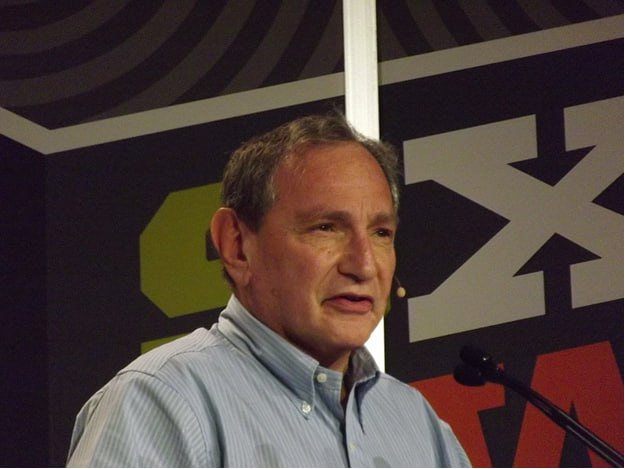
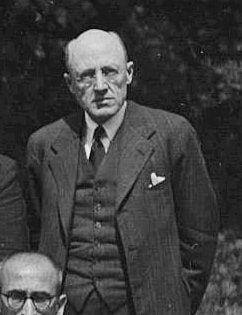
Karl Haushofer (1869–1946) was born in Munich, Germany, into a professor's family. He served in the army for more than 20 years and became the author of an original theory of the continental bloc and of pan-regions.
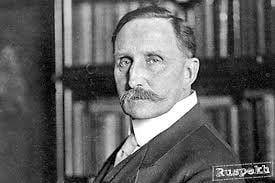
Karl Haushofer (1869–1946) was born in Munich, Germany, into a professor’s family. He served in the army for more than 20 years. From 1908 to 1910 Haushofer worked as a diplomat, serving as a military attaché in Japan and Manchuria. During the First World War (1914–1918) he commanded a field artillery brigade with the rank of major-general. Haushofer’s creative legacy is vast: he wrote more than 400 books on geopolitics, which testifies to the breadth of this figure’s knowledge.
Here is how Haushofer defined the subject of geopolitics: “Geopolitics is the science of the relationship between the earth and political processes. It rests on the broad foundation of geography, above all political geography, which is the science of political organisms in space and of their structure. Moreover, geopolitics aims to provide political action with the proper means and to give direction to political life as a whole. Geopolitics thus becomes an art — specifically, the art of guiding practical politics. Geopolitics is the geographical intelligence of the state.”
There is some evidence that Haushofer took part, along with Rudolf Hess (Hitler’s deputy in the Nazi Party and a Reich minister (1933–1941)), in writing the book “Mein Kampf”. In 1923, after the failed “Beer Hall Putsch”, Hess and Hitler hid in the Alps at Haushofer’s country house. While Hitler and Hess were serving their sentences in a Munich prison, Haushofer visited them often. Hess was one of Haushofer’s students. During these meetings and conversations Hitler became acquainted with geopolitics and later made it part of German ideology. It is said that Hitler adhered to Haushofer’s ideas until the autumn of 1938 and then completely abandoned the foundations the scholar had developed.
Karl Haushofer is the author of an original theory of the continental bloc. Analysing the outcome of the First World War, which Germany lost, Haushofer wrote that the period of geopolitical ordering and a new division of power over space did not end with the First World War but only began, because Germany lacked sufficient living space. All the more so as the Treaty of Versailles of 1918, humiliating for Germany, had been concluded.
He said: “If, on one square kilometre of poor north-alpine territory, 130 people are crowded together and earn their living, while in all the countries rich in colonies only 7, 9, 15, 23, 25 people earn their subsistence on the same area — and on more fertile land at that — then God himself justifies the Germans’ striving for a fair expansion of living space.”
He considered population density the main factor in preparing the Germans for a future conflict, and in this connection he proposed a programme of geopolitical education for ordinary Germans, so that the population would understand that Germany did not possess enough space for its development and prosperity.
Karl Haushofer had a good grasp of the law of planetary dualism, which implies the struggle of maritime countries against continental ones — that is, of thalassocracy (“power through the sea”) against tellurocracy (“power through the land”).
Haushofer supported the ideas of the geopoliticians Ratzel and Kjellén (I have written about these geopoliticians and their ideas). He believed that the main driving force of a state is securing and expanding space, which allows the state to enjoy great economic autarky and independence from its neighbours — a mark of a true great power. In his view, a state’s location and territorial characteristics are the main factors of its political might. He said that an important way for a great power to expand territorially is to absorb smaller states.
Russia can serve as an example. Today Russia has the attributes of a great power as a continental power, given its territory of more than 17 million km² and its borders with 18 states, as well as the fact that Russia is washed by 14 seas of three oceans. Russia enjoys genuinely serious geopolitical advantages. The United States also has unique geopolitical opportunities as a maritime power. It seeks to incorporate Canada and Greenland and to regain control of the Panama Canal in order to multiply and strengthen those opportunities and to counter China (the Panama Canal).
I have written earlier, in other pieces, about the geopolitical advantages of Canada, Greenland and the Panama Canal for the United States. China seeks to regain the island of Taiwan in order to expand its geo-economic and geopolitical space. Taiwan is a constraint limiting China’s free access to the seas and oceans.
Like Ratzel and Mackinder, he believed that a continental power has a significant advantage over a maritime one. Haushofer believed that the era of maritime dominance was coming to an end, since the future belonged to the continental powers, which hold decisive geopolitical advantages.
Given the above and the favourable conditions for Germany created by Britain’s decline, he put forward the idea of pan-regionalism, including a Pan-American, Pan-Asian, Pan-Russian and Pan-European region.
The Monroe Doctrine (the fifth president of the United States, 1823) was also one of the first pan-ideas, aimed at pushing the European metropoles out of South America.
The fact is that the United States, after completing its plans of geopolitical Pan-Americanism along the meridian and bringing Latin America into its sphere of influence, moved into the geopolitical field of latitudinal expansion, penetrating into Eurasia. The United States entered the war against Germany at the end of the First World War, thereby securing its interests in Europe. After that Haushofer drew conclusions about the need to divide the world along meridians, which received the name pan-regionalism and contradicted the existing “metropole–colony” model (of Britain).
Haushofer, opposing Britain and the United States, harboured the idea of a broad Eurasian union between Germany, the USSR and Japan, with Germany playing the leading role in that union, which also meant a global economic macro-region. In the negotiations Haushofer proposed uniting the countries of Eastern Europe around Germany in order to make this global bloc strong.
Haushofer initially divided the world, from north to south, into three pan-regions, each of which consisted of a core and a periphery: Pan-America with its core in the United States, Euro-Africa with its core in Germany, and Pan-Asia with its core in Japan and its periphery, including Australia. Each pan-region enjoyed economic self-sufficiency with rich natural resources. This model of pan-regions did not include the USSR. Apparently the territory of the USSR was included in the pan-regions led by Germany and Japan. Haushofer later did propose a fourth pan-region — Pan-Russia, with its sphere of influence in Iran, Afghanistan and India — while a substantial eastern part of the USSR was assigned to Pan-Asia under Japan’s leadership. In his mature years Haushofer returned to a three-part division of the world, excluding Pan-Russia from his model.
In the early 1940s Haushofer abandoned the pan-regionalist doctrine and proposed the idea of a large continental Eurasian bloc. Haushofer began to regard Germany and Russia as the core of a Eurasian union to which Japan might join, and in this connection he proposed the Berlin–Moscow–Tokyo axis. He assumed that
“a durable bond among the states along the Germany–Russia–Japan axis will allow us all to rise and become invulnerable to the anaconda methods of the Anglo-Saxon world…” (Britain and the United States).
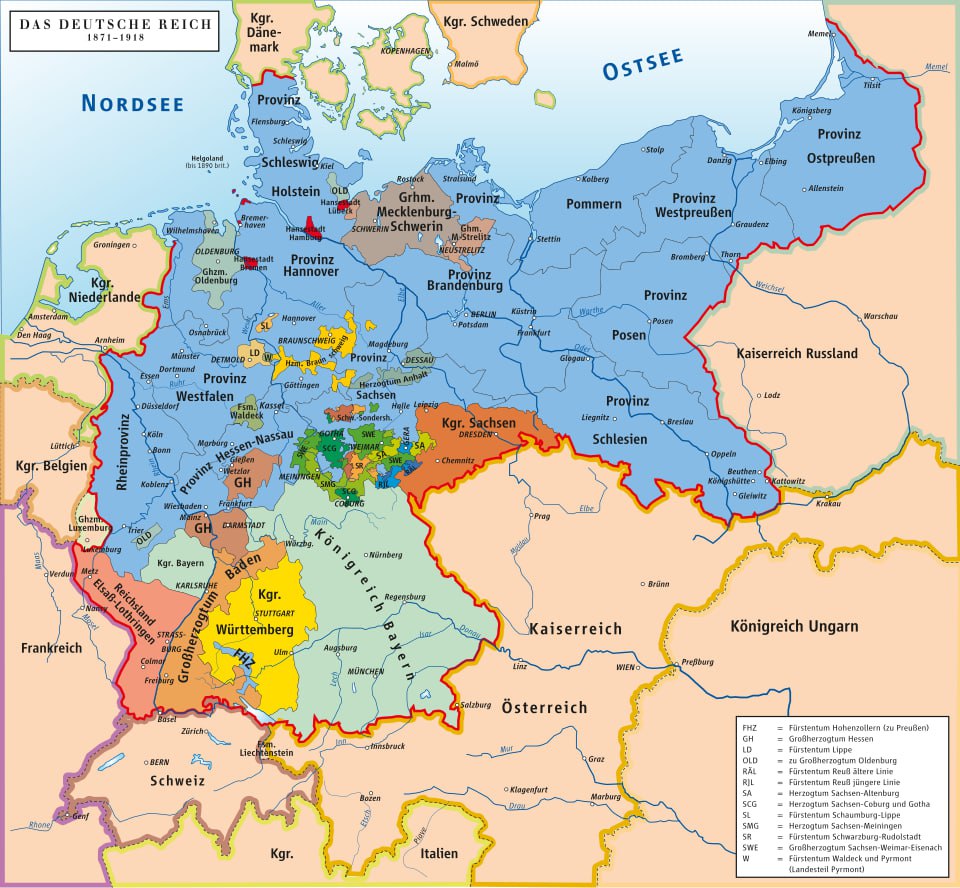
In his day Otto von Bismarck, who unified Germany in 1871, spoke of the need for a Russo-German alliance and warned the West of the dangers of a war against Russia. Haushofer called Japan “the Prussia of the East” and counted it among the countries with a continental cast of mind. Insular Japan he regarded as the complete opposite of Britain, which sought to set itself against the continent.
In addition, he assumed that the conclusion of the Molotov–Ribbentrop Pact would allow Germany to overcome its unfavourable, cramped position between thalassocracy (the maritime powers) and the Heartland (Russia).
He also proposed bringing into this bloc Francoist Spain, Vichy France and fascist Italy, which would provide a space close to the World Island of which the English geopolitician H. Mackinder spoke.
What advantages did an alliance of Germany and Russia offer, in Haushofer’s view?
First, this alliance would give Germany transcontinental communications from the Rhine to the Amur and the Yangtze, free of Anglo-Saxon influence.
Second, Germany would gain access to the world ocean and would possess the power of both a continental and an oceanic power, thereby ensuring Germany’s superiority over Britain.
In his view, the weakness of maritime powers is that they mainly develop the coastline and do not penetrate deep into the continental interior.
Moreover, Haushofer saw an advantage for a continental power in the use of “third space” (airspace) through the development and use of aviation, which in his view led many naval bases to lose their significance and opened the way for continental powers to prevail over maritime ones. Germany had powerful aviation before the start of the Second World War.
However, Haushofer’s ideas about creating a powerful continental bloc of Berlin–Moscow–Tokyo in Eurasia contradicted the racist theories of the Third Reich, according to which the Slavic and other peoples were racial enemies of the Germans. The leadership of the Third Reich changed Haushofer’s idea of the Berlin–Moscow–Tokyo continental bloc to Berlin–Rome–Tokyo, which meant replacing the Heartland (Russia) with a secondary peninsular power, making the continental bloc weak against thalassocracy (Britain and the United States).
As a result, Germany attacked the USSR and was defeated in the Second World War — precisely what Haushofer had feared when he proposed his version of a global alliance. Of course, the Third Reich leadership’s rejection of Haushofer’s idea is quite understandable, given that there are many works, both in the West and in the East, pointing to the possible financing by certain maritime powers of the Third Reich leadership’s rise to power and of the building of industry on that country’s territory to pump up its economy. For thalassocracy, or the maritime powers, it is vital to prevent the emergence of a powerful continental alliance in Eurasia that could oppose the interests of the maritime powers and push them out of Eurasia.
After the Second World War President Charles de Gaulle, founder and first president (1959–1969) of the French Fifth Republic, returned to the idea of the German geopolitician Haushofer. De Gaulle began to lay down the idea that the founders of European and world politics should be the continental powers — France, Germany and Russia.
De Gaulle was a French soldier and a brigadier-general. During the Second World War he became a symbol of the French resistance to fascist aggression. According to many polls, de Gaulle is considered one of the most outstanding rulers in the modern history of France after Napoleon I Bonaparte and François Mitterrand.
In 1959 de Gaulle said: “Europe from the Atlantic to the Urals — that is the Europe that must decide the fate of the world”, meaning it together with Germany and Russia (the Heartland). De Gaulle also noted at a meeting with S. A. Vinogradov, the USSR ambassador to France (from 1953 to 1965): “The time will come when we will build Europe together.”
General de Gaulle, like the English geopolitician Mackinder and the German geopolitician Haushofer, understood perfectly well that without the Heartland — that is, Russia — it is impossible to build a powerful continental bloc to stand against the Anglo-Saxon alliance of maritime powers, Britain and the United States, in Eurasia and their anaconda methods.
Mackinder wrote in his time that “Europe was the birthplace of modern civilisation, but the Heartland, controlled by Russia, was the force that directly exerted the strongest influence on it. An alliance of continental Europe with Russia (the Heartland) could lead to the formation of the most powerful dominant world centre of power, which is absolutely unacceptable for Britain.”
And if we return to the present, the war in Ukraine was aimed not only at weakening Russia and depriving it of the eastern part of the Heartland, but also at resolving the “German question”, as some analysts note. In reality, over the past few decades Germany has been reviving as the key power of the European union and was building a Fourth Reich in the form of a European union under Germany’s leading role. Germany and Russia were drawing closer through politics, culture and economics, including trade and the supply of Russian hydrocarbons through gas pipelines. The Nord Stream 1 and Nord Stream 2 pipelines were built to supply gas to the economies — above all Germany’s. Russia bought a great deal of industrial output from Germany.
Back in the early 2000s, Russia’s president V. Putin proposed the idea of building a “greater Europe” from Lisbon to Vladivostok, which was a continuation of the same idea of Haushofer, then de Gaulle and other geopoliticians of Europe’s continentalist school — the creation of a Eurasian bloc.
This political and economic convergence of Europe, in particular Germany and Russia, posed a threat to thalassocracy (the maritime powers), if one takes into account the thinking of geopoliticians of the continental school. After the conflict in Ukraine began, the Nord Streams were blown up, supplies of cheap Russian gas to Germany were curtailed, including the suspension of gas transit through Ukrainian territory, direct trade relations were ended and numerous sanctions were adopted that complicate trade between Germany and Russia.
As a result, Germany’s economy is now in a very difficult position and its industry has been in decline for a third year; many jobs are being lost (in 2024 German industry lost almost 70,000 jobs); enterprises, especially energy-intensive and metallurgical ones, as well as car plants, are closing because of the substantial cost of energy in Germany. German industry is losing its competitiveness in the world.
Frankly, Germany has now run into the same rake for the third time in its history: it entered a war against Russia (the Heartland) during the First and Second World Wars, and now it again stands against Russia — something Bismarck and Haushofer warned about in their time. They were the cleverest men of their age, understood Germany’s true interests and in the end proved right.
In March 2022 Ukraine was ready to sign a peace agreement with Russia in Istanbul, but it refused to conclude the Istanbul agreements soon after the British prime minister Boris Johnson arrived. Now a peace agreement between Ukraine and Russia will be concluded in the coming months on completely different terms.
In this connection I would like to quote the Prussian military figure and theorist Carl von Clausewitz: “The greatest problem of war is that the enemy refuses to behave as would be in his own best interests — he behaves differently.”