


Mackinder's geographical pivot of history
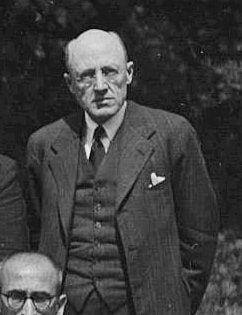
Halford John Mackinder (1861–1947) was one of the great figures in the history of geopolitics, whose 1904 paper set out the Heartland theory that would shape the field for a century.
Mackinder’s geographical pivot of history
Halford John Mackinder (1861–1947), an Englishman, was one of the great figures in the history of geopolitics. A geographer by training, Mackinder taught at Oxford, served as director of the London School of Economics, was active in politics and went to southern Russia as an envoy during the Civil War. He produced the most original and revolutionary idea about the geopolitical history of the world.
His central argument is that the most advantageous geographical position for a state is a median or central one. At the centre of the world lies the Eurasian continent, and at its centre is the “heart of the Earth”, or the Heartland, the most favourable territory for controlling the whole world. Mackinder set out his Heartland theory in a paper, “The Geographical Pivot of History”, delivered to the Royal Geographical Society on 25 January 1904.
In his view, the previous two millennia had first singled out Central Asia as the pivot area of history, the Heartland. From Central Asia the Huns, the Alans and, in the thirteenth century, the Mongols extended their influence over the Asian and European parts of the landmass thanks to the superior mobility of their forces. During the Age of Discovery and after it the balance of power shifted. Maritime and ocean-facing countries such as Portugal, Spain, Holland and France came onto the historical stage, and by the end of the nineteenth century Britain did too, the first “workshop of the world”.
In the paper Mackinder stressed that the age of naval dominance was drawing to a close, and that continental states were therefore aiming for a new, higher geopolitical status. He opposed Mahan’s concept of the relationship between sea power and land power (I will set out Mahan’s concept in other geopolitics topics). Mackinder saw Eurasia as the main potential world power. He regarded it as a gigantic natural fortress, impenetrable to maritime empires and rich in natural resources, and therefore called it the “pivot of world politics”.
According to the Heartland doctrine, the world is divided into two geopolitical hemispheres: a continental one and an oceanic one. The balance between those hemispheres depends on technological development, above all in transport, which can change the physical properties of the Earth’s space. Mackinder believed that the era of oceanic-hemisphere supremacy was ending, and that new transport technologies, above all railways, were shifting the vector of geopolitical power in favour of the continental hemisphere. In this connection he wrote:
“A generation ago it seemed that steam (by which is meant steam-powered ships) and the Suez Canal (built by the French) had increased the mobility of sea powers relative to land powers. Railways played mainly the role of an appendage to oceanic trade. But now transcontinental railways are changing the position of land powers, and nowhere do they work so effectively as in the closed central regions of Euro-Asia, where across vast expanses you will not find a single suitable log or stone with which to build them. Railways perform unprecedented wonders in the steppe, because they directly replaced the horse and the camel, so that a necessary stage of development was skipped… The spaces within the Russian Empire and Mongolia are so vast, and their potential in respect of population, grain, cotton, fuel and metals so high, that a huge economic world of their own will undoubtedly develop here, albeit a somewhat remote one, beyond the reach of oceanic trade.”