


ITC India–Middle East–Europe
In September 2023, on the sidelines of the G20 summit in New Delhi, India, the United States, the UAE, Saudi Arabia and the EU announced plans for the India–Middle East–Europe Corridor (IMEC). It is meant to speed up trade and deepen economic integration between Asia, the Gulf and Europe — but war in the Middle East now threatens it.
India–Middle East–Europe Corridor (Part 1)
In September 2023, on the sidelines of the G20 summit in New Delhi, plans were announced to create the India–Middle East–Europe Corridor (IMEC). At the summit India, the United States, the UAE, Saudi Arabia and the EU signed a memorandum of understanding to carry the project forward. Israel and Jordan are also expected to join. The stated aim of this large-scale project is to spur economic development and integration between Asia, the Gulf region and Europe.
Under the plans, IMEC will consist of two corridors: an eastern one linking India by sea to the UAE, and a northern one running overland from the UAE through Saudi Arabia, Jordan and Israel and then across the Mediterranean to Europe via Greece, Italy and France. The project envisages building and upgrading railways and ports, laying energy and digital-data cables alongside the rail lines, and building a pipeline to export green hydrogen.
Experts estimate that high-speed freight trains will cut delivery times by 40% and reduce dependence on transit through the Suez Canal, where shipping has become unreliable and unsafe because of Houthi attacks in Yemen. The idea for the corridor took shape in four-party talks between India, Israel, the UAE and the United States; Saudi Arabia later joined that format as it began talks on normalising relations with Israel.
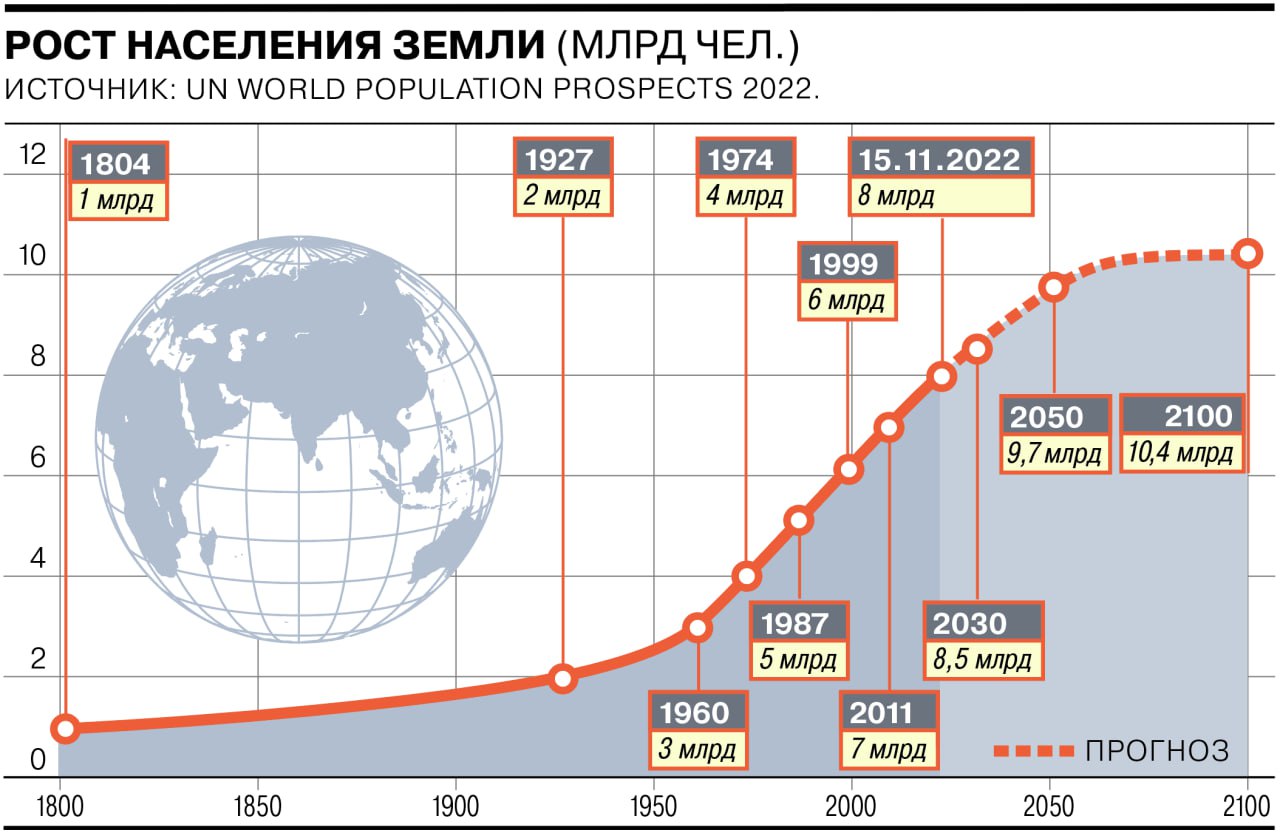
As for the economics of the project, there is genuine demand and a real economic case for it. India is now the world’s third-largest economy, growing fast behind China and the United States, with a population of almost 1.5 billion and a market expanding at a rapid pace. India needs everything, including the Middle East’s energy resources and access to the EU market; but the EU and the Middle East also need India’s vast market. For the West, India is the alternative to China. The corridor widens India’s strategic engagement with the Middle East and Europe.
In 2023 India’s trade with the EU came to $135 billion, confirming the EU’s place as India’s largest trading partner ahead of the United States and China. The EU became India’s second-largest market after the United States, taking 17.6% of Indian exports. In the 2023/2024 financial year, the UAE and Saudi Arabia ranked third ($83.6 billion) and fifth ($43.4 billion) among India’s trading partners. India, for its part, became the second-largest partner of both the UAE and Saudi Arabia. The Indian diaspora numbers 3.5 million in the UAE — a third of the country’s population — and 2.6 million in Saudi Arabia. Under the Comprehensive Economic Partnership Agreement between India and the UAE, tariffs were abolished or cut on more than 80% of goods from both countries, and technical barriers to trade were removed.
India–Middle East–Europe Corridor (Part 2)
If the India–Middle East–West (IMEC) project goes ahead, Saudi Arabia and Israel will gain considerably in geopolitical weight in the Middle East, since the route will run through these two strong regional powers. The strategic hub of the IMEC corridor is the port of Haifa in Israel. In 2022 a consortium of the Indian company APSEZ and Gadot Group won a tender to privatise the port for $1.2 billion, with the Indian and Israeli companies holding 70% and 30% of the shares respectively.
India is pursuing a strategy to turn itself into a global hub for the production, use and export of clean hydrogen, and is therefore promoting a pipeline system along the railways being built under IMEC to export hydrogen to the West (France, Germany and Italy). India plans to reach hydrogen output of 5 million tonnes by 2030 and has already earmarked $2.4 billion for that purpose.
India is also promoting the “One Sun, One World, One Grid” initiative to build a cross-border solar-energy distribution network. The first stage envisages a shared grid for South Asia, the Middle East and South-East Asia. India has signed memorandums of understanding on cooperation in renewable energy and grid interconnection with the UAE and Saudi Arabia. Under this initiative and the IMEC transport corridor, energy and digital-data cables are to be laid alongside the railways. In February 2024 India signed an agreement with the UAE to build and modernise rail lines and port infrastructure under IMEC.
If built, IMEC will be an alternative to the International North–South Transport Corridor and will bypass Russia and Iran. The International North–South Transport Corridor (INSTC) is an ambitious project to create a multimodal passenger and freight route from the seaport of St Petersburg to Mumbai, one of the largest ports on India’s west coast; its total length is 7,200 km. Its main advantages are that it halves the distance of carriage, cuts transit time by 40% and reduces transport costs by 30% compared with the international sea route through the Suez Canal, which is 14,500 km long.
Beyond these advantages, the North–South corridor gives Russia access to the large, fast-growing markets of Iran, India, South-East Asia, Africa and the Middle East, and gives India and Iran access to the markets of Russia, Northern and Western Europe via the Baltic Sea and of Central Asia via the corridor’s eastern route. Iran is the key country in the corridor, since all these routes pass through it.
India–Middle East–Europe Corridor (Part 3)
America’s decision to sign the memorandum creating IMEC at the G20 summit in New Delhi in September 2023 can be explained by its wish to back the new IMEC logistics route as a counterweight to China’s global Belt and Road Initiative and to the North–South ITC promoted jointly by Russia and Iran. It should also be understood that relations between Beijing and New Delhi are competitive, so building transport routes of their own fits the logic of that rivalry at regional and global level. China’s Belt and Road Initiative, however, has global ambitions, whereas IMEC is interregional in scope.
It should also be borne in mind that the India–Middle East–West corridor (IMEC) does not suit Türkiye, another important geopolitical player in the Middle East, because the route will bypass it. Ankara sees IMEC as a threat to Türkiye’s historical role in moving goods between Europe and Asia. Türkiye wants the main transport and energy corridors between Europe and Asia to run through it.
Türkiye’s president, Recep Tayyip Erdoğan, has announced plans for a trade corridor, the Development Road, running through Iraq and Türkiye to Europe as an alternative to IMEC. Erdoğan said that “there can be no corridor without Türkiye”, referring to IMEC. The Development Road project would build rail and road links from the Grand Faw port on the Persian Gulf through the cities of Diwaniyah, Najaf, Karbala, Baghdad and Mosul, then across the Turkish border at Silopi and on to Europe.
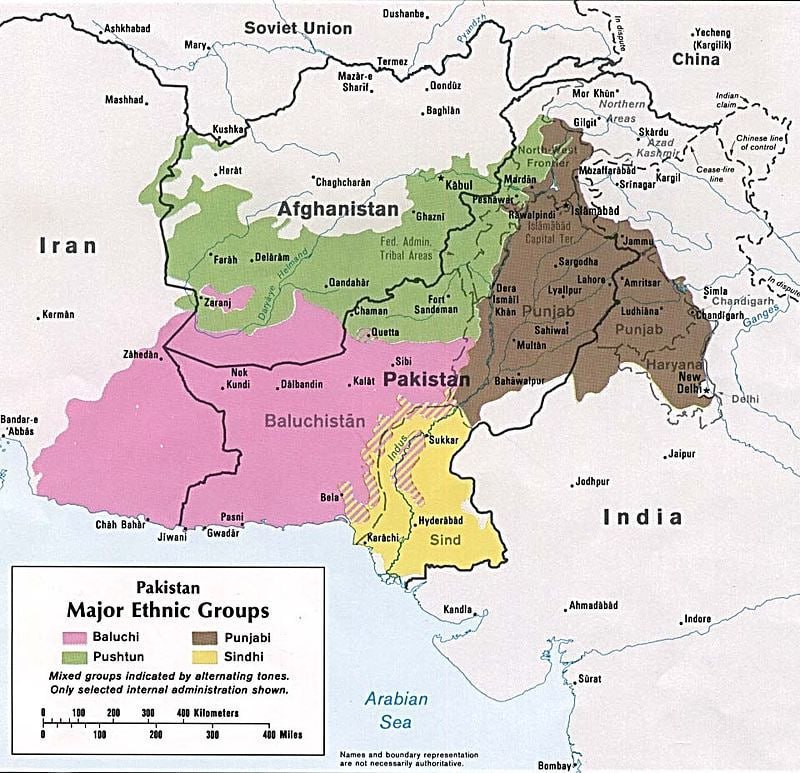
It is also worth keeping in mind that, beyond the goals above, India is pushing IMEC in order to get around Pakistan’s control over overland links to the Middle East and Europe.
India–Middle East–Europe Corridor (Part 4)
As I have noted before, Saudi Arabia and Israel are becoming pivotal to the IMEC corridor. One could say that this is their answer to Iran at the geopolitical and geo-economic level, since Iran is promoting its North–South project together with Russia and is an adversary of both the Kingdom and Israel at the regional level. Yet despite all the economic and geopolitical benefits for the participants, the main obstacle to IMEC remains tension in the Middle East.
The geopolitical fallout of the Israeli–Palestinian war jeopardises the project and encourages the search for other routes. The conflict has also halted the normalisation of relations between Israel and Saudi Arabia, at least until Donald Trump’s inauguration as the new US president, and has weakened the efforts of the Kingdom and Jordan, which carry the main burden of developing and building the route on their own territory. Saudi Arabia has said it will allocate $20 billion to the IMEC corridor.
The India–Middle East–West corridor (IMEC) was conceived with the normalisation of Arab–Israeli relations in mind, as a way to build and optimise trade routes; but given the factors and obstacles above, the current situation could delay the project for decades.