



The Global North and the Global South
The Cold War divided the planet into three worlds; after the Soviet bloc collapsed, the concepts of the Global North and the Global South took shape.
The Global North and the Global South
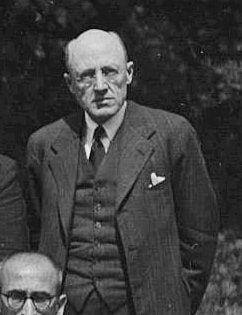
During the Cold War — the global confrontation between 1946 and 1991 between two different social and economic systems, the socialist one led by the USSR and the capitalist one led by the United States, which ended in a US victory and the collapse of the USSR — the planet was divided into three worlds: the first world was the capitalist world, the second the socialist one, and the third all the remaining countries. The term “third world” was coined by the demographer Alfred Sauvy, who noted in the 1950s that some countries belonged to neither the first nor the second bloc and proposed calling them that.
After 1991, with the collapse of the socialist bloc led by the USSR and the obsolescence of the concepts of the first and third worlds, the ground was prepared for new concepts: the “Global North” and the “Global South”. West German chancellor Willy Brandt also played a part in their emergence, proposing that the world be split in two by GDP per capita. Thus appeared the concepts of the “Global North” and the “Global South”, with the dividing line between them — named after Brandt (the Brandt Line) — running along the 30th parallel north. Everything above it came to be called the “North”, and everything below it the “South”.
Today the “Global North” is taken to mean the countries of Europe and North America (the United States and Canada), Israel, Japan, South Korea, Singapore, Australia and New Zealand (more than 50 countries with a high level of development). The “Global South” is usually taken to mean the countries of Africa, Latin America and the Caribbean (including Mexico), Asia (excluding Israel, Japan and South Korea), Oceania (excluding Australia and New Zealand) and the Middle East (including Türkiye). That is around 130 or more states. These terms imply a division of the world into rich northern countries and less wealthy and poor southern ones — a global contradiction between developed and developing countries.
After the collapse of the USSR the capitalist system became global, covering every country in the world. Immanuel Wallerstein at one time proposed dividing the world into core, semi-periphery and periphery, devising the concept of the world-system. Rich and politically stable societies form the core of the capitalist system (the United States and Western Europe); dependent and unstable ones the periphery; and those between core and periphery the semi-periphery. The core countries dominate, while the periphery serves the interests of the centre, supplying it with agricultural produce, luxury goods, raw materials and cheap labour. The semi-periphery is an intermediate trading zone between core and periphery.
The Global North (the United States and Western Europe) belongs to the core of the capitalist system, and the countries of the Global South to the periphery — except for China, India, Iran, Brazil, Argentina, Mexico, Indonesia and Taiwan, which are usually classed as semi-periphery: they are fairly developed industrial countries that export industrial and non-industrial goods and exploit the resources and labour of other countries, but they still lack the power and economic might of the core countries. Global North countries such as South Korea, Singapore and Australia belong to the semi-periphery. Russia, too, belongs to the semi-periphery. In my view, Russia belongs neither to the Global North nor to the Global South. Geographically and culturally it is a bridge between Asia and Europe, between North and South. The countries of the Global North are understood to be the countries of the collective West, and Russia is the antithesis of the West, its historical counterweight.