

Friedrich Naumann's concept of Central (Middle) Europe
A further instalment on the thinkers of the German school of geopolitics, this time Friedrich Naumann's wartime vision of a German-led Mitteleuropa.
For those interested in geopolitics, I am posting another instalment in the series on the ideas of the German school of geopolitics.
Friedrich Naumann’s concept of Central (Middle) Europe
The point is that by the end of the 19th century Germany had arrived late to the colonial partition of the world carried out by Britain, France, the United States and Russia. Germany therefore needed new territories and markets for rapid economic development and to close the gap with the world powers. It sought a new division of the world and a change to the established world order. German territorial expansion was envisaged along two political lines: continental and maritime. The continental policy of expansion was directed eastwards. The maritime policy envisaged acquiring new territories in other parts of the world, in Africa and South-East Asia for example, by building a German navy on the model of the British fleet. These strands of German geopolitics were controlled by Kaiser Wilhelm II and Admiral Alfred von Tirpitz, who placed his emphasis on developing a submarine fleet that was active across the Atlantic from the very start of the First World War.
The ideas of Central (Middle) Europe were formulated by the geopolitical thinker Friedrich Ratzel and reached their finished form in the work of the German geographer J. Partsch. Broadly, the concept of Central (Middle) Europe reflected Germany’s desire to take control of the living space of neighbouring states and to win access to the Mediterranean and to Asia. The region’s other peoples were offered protection from external danger, especially from France in the west and Russia in the east. Territorial expansion in Europe was seen as the only way to achieve that goal. According to the geopolitical doctrine of Middle Europe, Germany could be safe only as the central part of a union of Central European states. Otto von Bismarck once said that Germany’s only effective frontiers were its army. The aim was to create a Greater Germany, centred on Germany and Austria-Hungary.
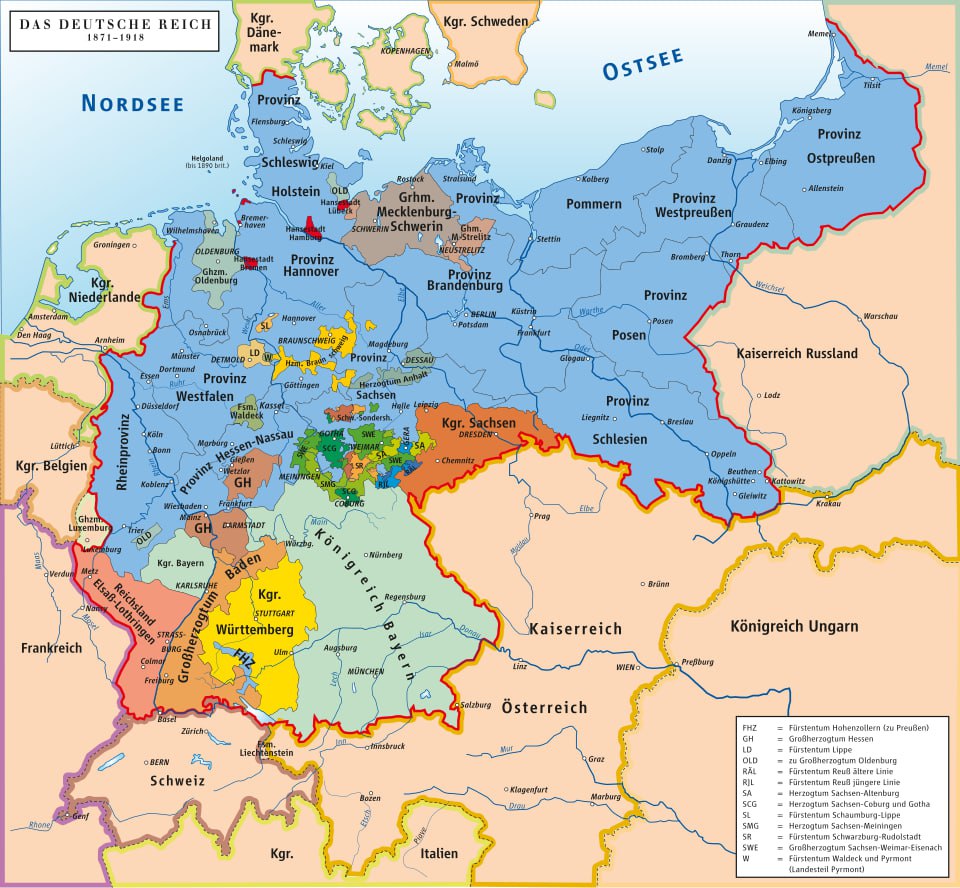
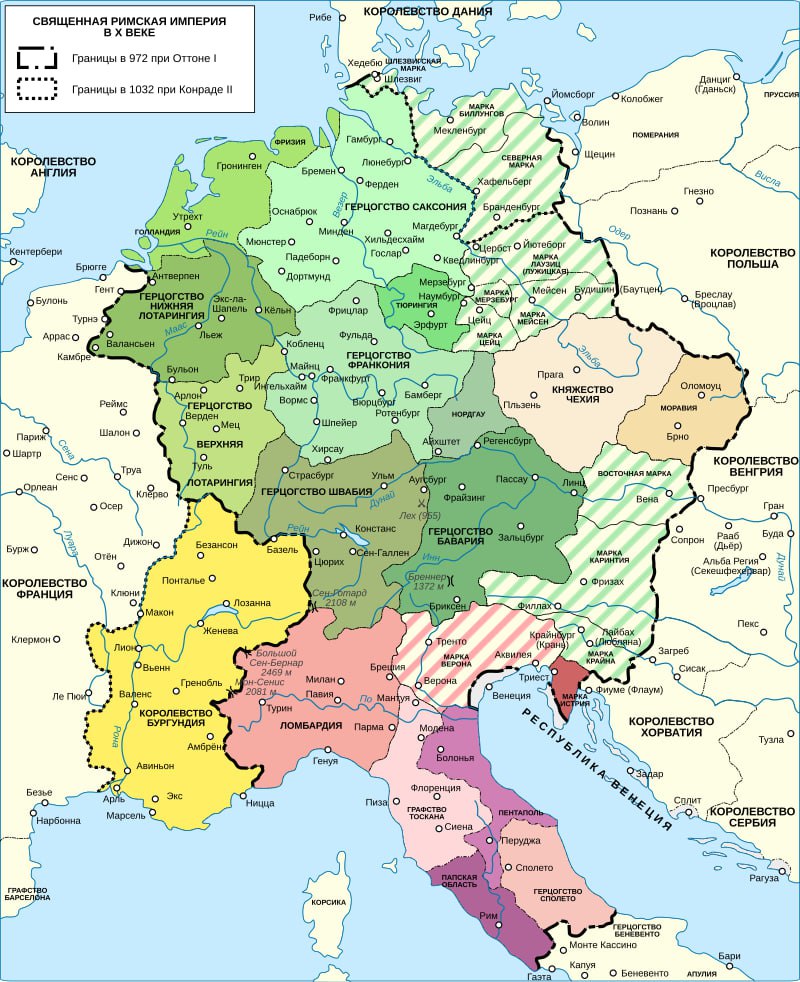
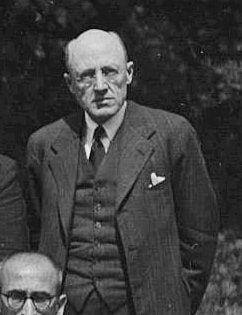
During the First World War the German politician and publicist Friedrich Naumann (1860–1919) set out a different version of the Middle Europe concept in his book Mitteleuropa. Naumann’s Central (Middle) Europe takes in the territory from the North Sea and the Baltic to the Alps, the Adriatic (the sea that forms part of the Mediterranean between the Apennine and Balkan peninsulas) and the southern part of the Lower Danubian Plain (a large plain in southern Romania and northern Bulgaria, 560 km long, running from the Iron Gates on the Serbian–Romanian border to the Black Sea), all united under German administration. An alliance between Germany and Austria-Hungary was to hold this union together. Naumann also argued that the Balkan states and Italy should join Middle Europe.
Friedrich Naumann’s concept of Central (Middle) Europe
Naumann writes: “All participants in the world war are aware that, in the present and the future, small and medium-sized states cannot be the arbiters of world politics. Our sense of scale has changed considerably. Only truly large states count for anything; small ones either profit from quarrels among the great powers, or must first ask permission if they wish to do anything that goes beyond the accepted limits.” He continues: “Anyone who wants to remain small and alone nevertheless becomes dependent on the position of the great powers. This is the natural consequence of modern communications and military technology. Whoever is not in an alliance is isolated; whoever is isolated is not safe.”
Friedrich Naumann’s concept of Central (Middle) Europe
In his view, even if Germany and Austria-Hungary were to merge economically into a single whole, they would still not amount to a sufficiently large world organism. Supreme power is gradually concentrating in just a few places on the globe, and only a handful of centres of genuinely strong dominion exist — London, New York and Moscow (Petrograd), he notes.
Naumann stresses: “The bloodiest struggle is now under way (he means the First World War of 1914–1918) over whether an independent Central European centre can hold its own between Russia and England. The human group of Central Europe is fighting for its place in the world. If we lose, we shall probably be condemned for ever to be a ‘satellite people’; if we half-win, we shall have to enter the struggle again; if we win, we shall ease the task of our children and grandchildren, and Middle Europe will be entered in the land register of the centuries to come.” He thus regarded Britain, the United States and Russia as new supranational state organisms, and believed that Middle Europe could become a fourth world state if it won the war.
In his view, it is out of the struggle among individual states that these growing world centres arise. The military struggle of states is not some game replayed on the same chessboard with the same pieces. The demands placed on every state grow, thanks to improvements in military technology, ever larger armies and rising military spending, and a state that cannot keep up this competition is forced back into the second or third rank.
Naumann proposes creating a superstate (Oberstaat) in the form of a confederation (a union of states) dealing above all with economic and defence matters. This confederation was to have a Central European common market. The Middle Europe project also provided for supranational and supra-state governing structures concerned primarily with defence and economic affairs. Naumann considered the formation of a supranational Central European identity important. In his view, Central Europeans should feel loyalty both to their own nation and to a wider fatherland, but Germany was to hold the dominant position in this community.
Friedrich Naumann’s concept of Central (Middle) Europe
Naumann writes: “Everyone is ready to agree to certain concessions in order to carry out the Middle Europe plan, provided the independence of their state existence is not affected.” He concludes that “…Middle Europe will be not a federal state but a union of states: although the former would offer more real advantages, it is not feasible.”
As for the military dimension of Middle Europe, Naumann argues that membership in the union would limit the states’ particular political objectives, since they would have to give up the ability to wage wars of their own. On the other hand, this limitation was to give them reliable security for their existence, since they could no longer be attacked individually.
Naumann gives Hungary an important role in the creation of Middle Europe, noting: “…We fully recognise that such a decision will be especially hard for Hungary. Perhaps Hungary bears the largest share of responsibility for it. To a certain degree the whole future fate of the German nation lies in the hands of this non-German state, for if Hungary refuses to take part in forming Middle Europe, it is unlikely to come into being at all. The Hungarians know this and are preparing for the historically decisive word that is expected of them. If they do not say it, then for us and for them the chance of world-historical significance will be lost for ever.”
After Germany’s defeat in the First World War, the ideas of a German-run Central (Middle) Europe were not realised. They were revived and fused with racist and military-political doctrines in Nazi Germany, but were still never realised, because of defeat in the Second World War.
The ideas of Central (Middle) Europe were revived after German reunification (the FRG and the GDR) and the collapse of the world socialist system in 1989. These ideas were used when the former Warsaw Pact countries — Poland, Hungary, the Czech Republic, Slovenia, Slovakia, Bulgaria and Romania — were admitted to the EU. These are the very countries that, under Naumann’s concept, were also to have been included in a German-run Middle Europe as an outcome of the First World War.
That is all on Friedrich Naumann’s concept of Middle Europe.