


The impact of artificial intelligence on the future labour market: which jobs may disappear and which may remain
According to an IMF report, artificial intelligence affects occupations differently: some face a high risk of replacement, others are safe.
The impact of artificial intelligence on the future labour market: which jobs may disappear and which may survive — part 1
According to a new report by the International Monetary Fund (IMF), “Artificial Intelligence and the Future of the Labour Market”, the range of occupations exposed to automation is widening faster than previously thought. A World Economic Forum (WEF) study, “The Future of Jobs Report 2025”, notes that AI will create roughly twice as many jobs as it “kills”, and that 78 million new jobs will appear worldwide by 2030. The question is very hard to grasp in full when it comes to the prospects for the labour market, given the scale of the coming changes, but it needs some preliminary explanation.
Various analytics agencies have reported that 40% of all jobs worldwide are affected in one way or another by automation and AI, with particular attention to developed countries, where the level of vulnerability can reach 60%, since they have more jobs in services, information technology and finance. The latest IMF report, however, stresses that the estimate may be higher still once powerful new tools based on generative neural networks are taken into account.
The situation in developing countries still looks a little less alarming, at around 40%, while in low-income countries with a predominantly agricultural sector automation affects about 26% of jobs. But here too everything could change sharply: if access to digital technology and infrastructure grows and robotics and algorithms reach remote regions, the risk of mass layoffs will rise as well.
Of course, the figures in the arguments above do not mean that people will quickly and en masse lose their jobs. For now the question is the replacement of routine work that does not require human creativity. Accounting departments, for example, will shrink dramatically, as routine operations such as reconciling accounts are performed by AI. Business will have an interest in this, since AI will substantially cut costs and raise efficiency.
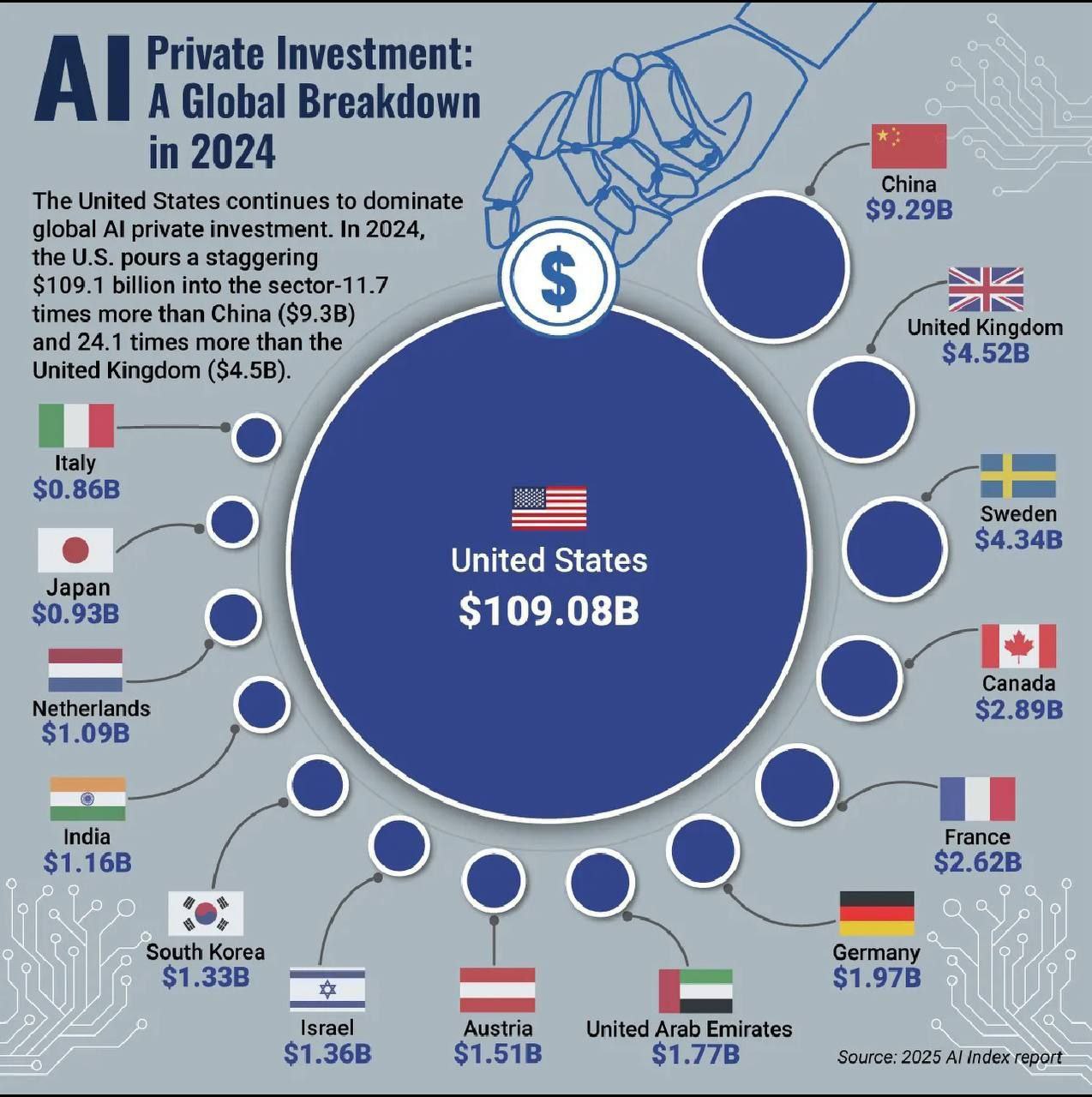
There is also the problem of the gap between countries and between industries, which AI will widen. Developed countries are adopting AI very actively, investing hundreds of billions of dollars in it. Trump, for instance, has announced $500 billion of private investment in AI and digital infrastructure under state support. A Chinese bank has announced around $130 billion for AI and related industries. Russia and India are actively developing their own AI. But laggard and small countries risk being left on the periphery of the new technological revolution, which could widen the economic gap by many decades more.
The impact of artificial intelligence on the future labour market: which jobs may disappear and which may survive — part 2
According to the IMF report, the occupations at high risk of replacement by AI (50–100%), dominated by routine and repetitive operations, include:
-
Telemarketers, call-centre operators and other operators (80–100% risk of replacement. Cold calling, voice bots and neural networks can already hold consultations, recognise emotions and propose optimal solutions, and so on. AI works around the clock and is becoming more effective than human operators);
-
Office workers and accounting assistants (50–80%; work with documents, databases and financial statements. AI will replace these occupations);
-
Copywriters and technical writers (50–75%; AI already writes short texts and product descriptions, including technical ones);
-
Accountants and auditors (50–70%; AI can do much of what these occupations allow);
-
Bank clerks and cashiers (60–80%; online banking, electronic transfers, mobile and other apps, and ATMs);
-
Postal workers (60–90%; the spread of email and messengers, and delivery of parcels by drones and robots);
-
Pharmacists (50–70%; AI can analyse a patient’s medical data and issue precise prescriptions, including dosages, and replace many functions in the pharmacy business, including drug counselling);
The occupations at high risk of replacement also include drivers (the United States and China have begun using automated driverless trucks to move goods).
The occupations listed above involve routine work, and AI is very likely to take over these functions.
There are also occupations at medium risk of replacement (20–50%), where AI can replace a substantial part of the functions but cannot fully replace a human being. Here people will work alongside AI in performing their duties. These occupations include:
-
Information security specialists (20–40%; AI can automatically identify network vulnerabilities and respond accordingly, but many cyberattacks are unique and require creativity as well as a knowledge of psychology);
-
Lawyers and judges (20–50%; AI will be able to do much in law, including analysing precedents and documents, but human judgement and a moral and ethical component are essential here);
-
Diagnostic physicians and radiologists (30–50%);
-
Software engineers (10–40%; complex projects require creativity, imagination and close interaction with people);
-
Journalists (20–40%; investigative journalism, exclusive reporting and analytical pieces require human skill);
-
Architects and designers (20–40%; creating a unique project requires human experience and imagination);
-
Medical laboratory technicians (30–50%).
The impact of artificial intelligence on the future labour market: which jobs may disappear and which may survive — part 3
There are occupations at low risk of replacement (under 20%), where AI is not expected to replace people any time soon and which demand hard physical effort, a high degree of emotional intelligence and creative imagination. These include:
-
Builders, plumbers and electricians (under 10%; construction robots require a special approach and rapid responses to non-standard situations);
-
Teachers, educators and psychologists (5–15%; education is not only information but also knowledge, experience, upbringing, interaction with the younger generation, a feel for children’s emotional state, live contact, where knowledge is passed on at an emotional, mental and spiritual level as well, and so on);
-
Designers, artists and musicians (10–15%; this calls for creative and conceptual solutions and an ability to feel the audience — art is not an algorithm, it is created within a culture);
-
Social workers, nurses and carers (5–15%; these occupations offer support, communication, psychological and emotional help — people are social beings);
-
Professional athletes and coaches (under 10%).
The impact of artificial intelligence on the future labour market: which jobs may disappear and which may survive — part 4
The world is now living through the sixth technological order, in which AI, biotechnology and nanotechnology converge, and threats to the population over employment and the labour market have always existed whenever technological orders change.
Before the sixth technological order the world passed through five very important ones: the First Industrial Revolution (the invention of spinning machines and the rise of the largest factories); the age of coal’s hegemony and steam-engine technology (the arrival of locomotives and steamships, and the use of steam engines in production at plants and factories); the age of steel (the invention of the Bessemer process (converter) for the mass smelting of steel); the age of oil (the mass use of oil in the manufacture of various goods and in energy, the invention of conveyor production (Ford) and the mass development of the car industry); and, finally, the fifth technological order, the age of information technology (computers) and telecommunications.
The first three technological orders listed above can be grouped under the common name the Great Industrial Revolution, which meant the mass transition from manual to machine labour, from the manufactory (an enterprise based on the manual labour of hired workers and the division of labour into separate production operations) to the factory, and which began first in Britain, then in France and Germany, and later in the United States and Russia.
The result of the Great Industrial Revolution was industrialisation — the transition from agricultural to industrial production — which transformed agrarian society into industrial society over 3 to 5 generations. Broadly, this transformation began in the second half of the 18th century and continued throughout the 19th century.
The characteristic features of the industrial revolution were the rapid growth of the productive forces of labour on the basis of the mass use of machines, including steam engines, rapid urbanisation, a change in the entire structure of society, rapid economic growth and the establishment of capitalism as the dominant world economic system.
To understand a little of what awaits humanity in the coming years with the development of AI, we need to understand what happened during the Great Industrial Revolution. A few examples:
On pages 90–93 of the book “World Inventions in Dates” (1982, by F. Ilek, J. Kuba and J. Ilkova) it is said that the smelting of pig iron with coal coke, developed by the English metallurgist Abraham Darby, became the basis of all metallurgical production in the world. It substantially changed the metallurgical industry, which until then had consumed large quantities of charcoal and depended on forest resources. The new metallurgical industry was tied to coal deposits. New, modern centres of heavy industry emerged as a result.
Fernand Braudel, in his book “The Perspective of the World: Civilisation and Capitalism, 15th–18th Century” (vol. 3, p. 571), reports that the practice of crucible casting (putting) had by 1780 introduced coal at every stage of metal refining. National production of iron ingots immediately rose by 70%.
Braudel also reports that the arrival of mechanical spinning machines (Arkwright, Hargreaves and Crompton in the 1760s–70s) and their widespread use in the textile industry produced a tenfold increase in yarn output and a rise in imports of raw cotton from the Antilles, the East Indies and soon the southern English colonies in America (“The Perspective of the World: Civilisation and Capitalism, 15th–18th Century”, vol. 3, pp. 584–585). Many of these textile factories employed 700–800 people (World History, 1958, vol. 5, p. 492).
The impact of artificial intelligence on the future labour market: which jobs may disappear and which may survive — part 5
As for the steam engine, invented by the English engineer and entrepreneur James Watt in the 1770s and used, with improvements, in practically every factory, steelworks and coal field in the second half of the 18th and in the 19th century, the French economist Émile Levasseur (1828–1911) calculated in his work “La population française” that one steam horsepower was equivalent to 21 men, and that by 1840 France therefore had a million slaves of a special kind — a total set to grow exponentially: by 1880 it would reach 98 million, or two and a half times the population of France. A fantastic growth in the productive forces of labour, delivered by the steam engine!
E. Lavisse and A. Rambaud note in their book “History of the 19th Century” (1938, vol. 3, pp. 418–419) that “the use of steam as a motive force only took root from 1835 onwards (meaning France). The first steps, taken during the Restoration (the period of 1814–1815), were extraordinarily slow, and in 1830 French industry used only 10,000 steam horsepower. In 1847, 4,853 machines gave industry more than 60,000 horsepower.” This was already a substantial increase in the productive forces of labour through the introduction of new technologies based on steam, produced with cheap coal.
It should be stressed that before the Great Industrial Revolution began people lived mostly in rural areas, worked by hand, and Europe’s cities were small. As the productive forces of labour grew on the basis of spinning and steam machines, and as urbanisation accelerated, people who worked by hand became uncompetitive against the emerging factories full of machines and were forced to leave their familiar homes and move to the cities in search of factory work.
The new industry demanded a large mass of hands to work the machines in factories and plants. People from rural areas were moved en masse, including by force, into the cities to meet the demand for labour. This happened in Britain, for example. New occupations and specialities tied to working with machine tools and machines naturally appeared. Those left without work had to retrain for new specialities, while old occupations disappeared.
As a result of these sweeping changes in the economy and social life, a new class appeared — the working class. These workers were often unprotected in their rights and had to work up to 14 hours in factories and plants. Over time this class became aware of its rights by creating parties and trade-union cells and advancing ideas for defending its interests and fighting for those rights, in order to win decent pay and shorter working hours. Marxist movements emerged and revolutions even took place, producing the Soviet Union, where the working class was protected in its rights. As a result the West too was forced to reform the social and economic life of society by granting the working class greater rights and protection. For almost a century a balance of interests was secured between the working class and the economic and political classes.
The impact of artificial intelligence on the future labour market: which jobs may disappear and which may survive — part 6
In principle, the characteristic signs of a new class in the sixth technological order, which the world is living through today, are already visible. It is the class of digital specialists, AI specialists, engineers and occupations tied to AI and information programmes — a class of highly skilled and highly paid specialists. This class will be as influential as the working class was during the Great Industrial Revolution and the fourth technological order, or the age of oil.
As I noted earlier, routine work and operations will be handed over to algorithms. People will have to master more complex and multifaceted work and occupations. This trend may mean that part of the middle class feels pressure from above, from highly skilled specialists, and from below, from robotisation and automation.
Other trends linked to the development of AI include rising unemployment in the short and medium term in the areas that will be automated; growing inequality between those who have digital skills and good incomes and those who do not; and the need for retraining. These trends may lead to social tension.
In the first part of the article I set out the scale of investment among the world’s largest countries (the United States, China, Russia and India) in AI, robotics and automation. It is already clear that AI and automation will deliver a sharp leap in countries’ economic growth by raising the productive forces of labour, as happened during previous technological orders.
Yet if the transformation of agrarian society into industrial society took three to five generations during the Great Industrial Revolution in Europe, the current pace of AI development gives countries and peoples no such time to adapt. This is one of the key moments in history! Only large countries have the means and resources to develop AI, and this is visible from the countries involved. Only a few countries will possess such technologies — and I have noted “which countries” — which will substantially widen the gap between developed countries with their own AI and laggard and small countries that will use someone else’s AI.
In this connection it must be noted that the rapid development of AI should be accompanied by effective measures on the part of governments and business to retrain the population and create new jobs. Without sufficient investment in education and social programmes, automation could deal a heavy blow to society, since, I repeat, AI and quantum computers are developing too fast.
The impact of artificial intelligence on the future labour market: which jobs may disappear and which may survive — part 7
I am not an AI specialist, but I try to analyse what is happening in the new sixth technological order, which is expressed in the crossbreeding of AI, biotechnology and nanotechnology. These technologies are both a blessing for humanity and a threat, since they can be used, and will be used, including for military purposes. History shows this, but that is another topic.
As I understand it, based on articles about AI in the media and statements by AI experts and the developers themselves, AI rests on enormous databases, and the more data there is, the better. That is why the rapid and active advance of digital technologies and the digitalisation of social and economic life in countries, especially developed ones, is clear to me in broad outline. But AI lacks the imagination, creative thinking, flexibility of mind and mobility that the Almighty gave humanity; AI imitates good and bad human behaviour. A person may think that AI has created something genuinely new, but in fact it may be something old and forgotten, since AI uses enormous databases stretching back to the earliest times, and the volume of data it uses must constantly grow, or AI will stop developing and become ineffective.
It would be fitting here to quote Igor Stanislavovich Ashmanov, a Russian entrepreneur and specialist in information technology, artificial intelligence, software development and project management. He is a member of the Presidential Council for Civil Society and Human Rights and president of the company Kribrum, which develops a social-media monitoring service designed to manage online reputation and ensure information security. He says:
“Chat GPT imitates thinking, but in reality it simply generates text based on the probabilistic nature of utterances — that is, it selects the most probable words in a given sequence of words, based on an enormous database of texts. At the same time, a Western ideological agenda is manually ‘sewn’ into it and passed off as artificial reason.”
The key words are “imitation of thinking”, “enormous database” and “an ideological agenda is sewn in”. He knows perfectly well what he is talking about.
In other words, however much AI and the information technologies associated with it are advertised, and however much is invested in developing AI and super quantum computers, AI will be one of the instruments — a very important one — in managing social, economic and political processes. Of course, any country that possesses these technologies will use AI to present the idea of “democracy” or other ideological questions in its own key.
Another matter is that AI really will replace humans in performing many routine functions and operations in the longer term, as I said in the second and third parts of the article — and that is the greater part of occupations and specialities. Moreover, AI technologies really can deliver economic growth and lower costs by raising the productive forces of labour, which is what decision-makers are hoping for.
The military-industrial complex (MIC) is already making full use of AI in its technologies and in countries’ armed forces when carrying out tactical and operational tasks in theatres of war. The conflict in Ukraine shows this clearly. All technologies first appear in the MIC and then spread among the population and business. Chinese companies have begun using automated driverless trucks to move freight in order to raise business efficiency and cut costs.
The impact of artificial intelligence on the future labour market: which jobs may disappear and which may survive — part 8
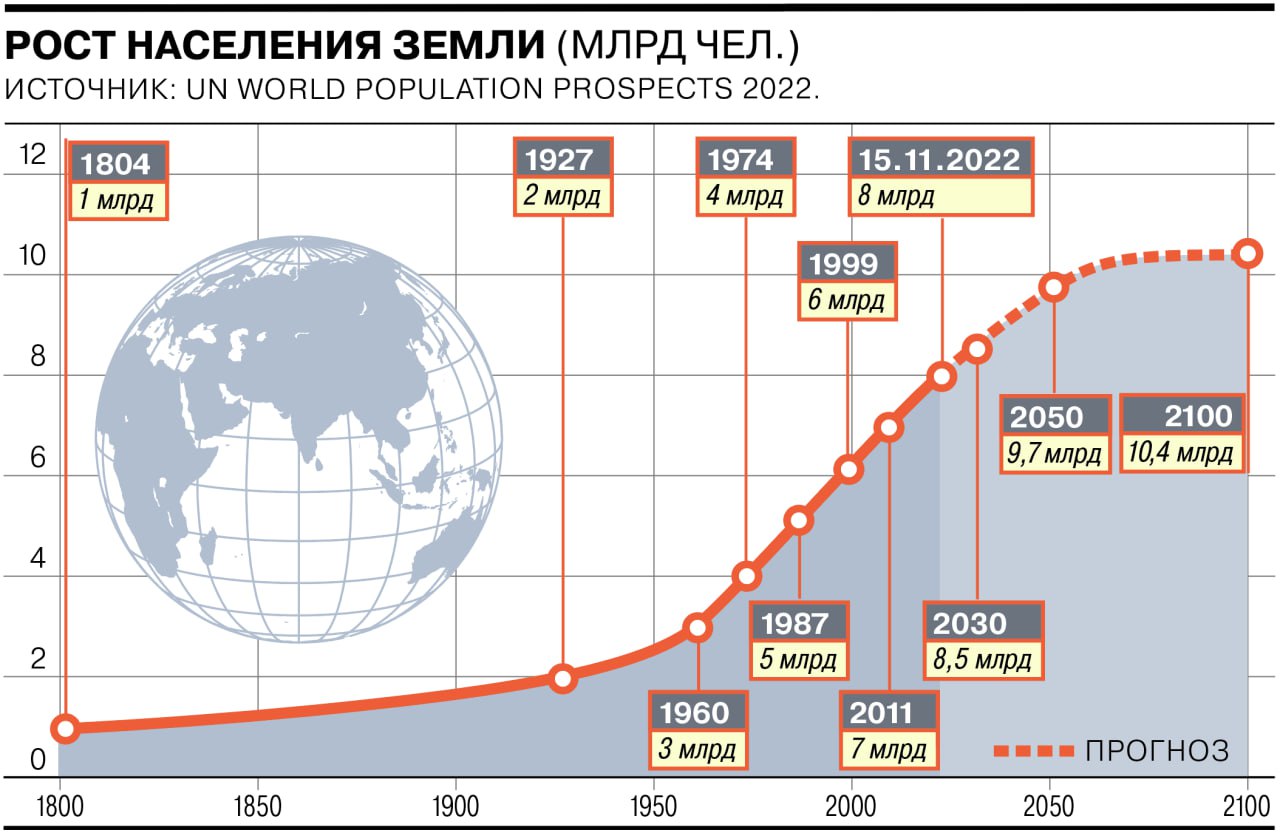
It should also be noted that the world faces major demographic problems. The global total fertility rate has fallen from 4.97 births per woman in the first half of the 1950s to 2.3 in 2024. That is close to the minimum needed to keep the population at its current level. Frankly, it is very low! To keep a population stable, a total fertility rate of about 2.1 births per woman over her lifetime is needed.
In this connection it should be stressed that the active development of AI, robotisation and automation will have to help address the shortage of population, or of labour, in countries, thereby raising the productive forces of labour. I can give a few more historical examples of the United States tackling a labour shortage when it faced the problem before the industrial revolution there.
World History (1959, vol. 6, p. 264) says the following:
“The active use of steam engines in various branches of US industry began in the 1850s. The development of mechanical engineering was held back by competition from England, which supplied machines more cheaply and of better quality than American ones. An English cotton gin, for example, cost 50 times less in the United States than the same machine made in America. From the late 1840s mechanical engineering began to develop faster than in other countries. The constant migration of the population to the western territories of the United States caused a shortage of labour. The shortage of labour encouraged the intensified introduction of machines into all branches of the economy. Machine tools for working metal began to be made, and sewing and other machines appeared. Agricultural machines found wider use in the United States than in the other countries of Western Europe.”
Moreover, wars in the world are powerful drivers of economic development, including in science, engineering and technology and in AI. Every major country seeks to possess the most modern technologies and effective AI, giving it advantages over an adversary, including on the battlefield. For example, the halt in supplies of English goods during the Anglo-American War of 1812–1814 forced American elites to use domestic resources to develop industry in Pittsburgh.
That war of 1812–1814 began as a result of Britain’s desire to undermine the US economy and trade and of the expansionist policy of certain circles in the United States that hoped to seize the territory of Canada. American troops won victories on Lake Erie (September 1813), Lake Champlain (September 1814) and elsewhere. In 1814 the Treaty of Ghent was signed, restoring the pre-war position. This US victory forced England, which was busy pursuing Napoleon, to finally come to terms with the loss of its North American colonies and to concentrate on developing trade links with the young American state (Soviet Encyclopaedic Dictionary, Moscow, 1987, p. 55). Today US President Donald Trump speaks of incorporating Canada into the United States, and so far everything he says he has actually carried out.
A present-day example can also be given. The military conflict on Ukrainian territory and the subsequent economic, financial and trade sanctions against Russia led to the development of the defence-industrial complex, mechanical engineering, machine-tool building, the invention of new metal alloys, the revival of the semiconductor industry on the basis of modern technologies and, naturally, AI-related technologies in Russia. Although Russia is only reviving its semiconductor industry, investing enormous financial resources, and lags significantly behind the Western (the United States, Germany) and Eastern countries (Taiwan, China, South Korea and Japan) in this area, that lag will shrink every year, because there is the political will and enormous resources are being allocated to it.