












“The attempt to create paradise on earth inevitably leads to the creation of hell”;
“In philosophy, as in science, there is such a thing as fashion. But anyone who takes the search for truth seriously will not follow fashion; he will rather distrust it, and even be able to fight it”;
“Success in life is mostly a matter of luck. It correlates weakly with merit, and in every field of life there have always been many people of enormous merit who did not succeed”;
“But the greatness of Plato the sociologist lies, of course, not in general abstract speculations about the law of social degeneration. On the contrary, it is rooted in the value and care of his observations and in the astonishing sharpness of his sociological intuition. He saw what no one before him had seen, and what was rediscovered only in our own time. One example is his theory of the prehistory of mankind, of the history of the tribal patriarchy, and more generally his attempt to identify typical periods in the development of social life. Another is Plato’s sociological and economic historicism, his attention to the economic background of political life and historical development. Marx revived this theory under the name ‘historical materialism’. A third is the fascinating Platonic law of political revolutions, according to which every revolution springs from discord within the ruling class (or ‘elite’). This law served him as the basis for analysing the means of delaying political change and creating social equilibrium, and it was recently rediscovered by theorists of totalitarianism, in particular Vilfredo Pareto”;
“And it is equally vain to hope that circumstances may improve if people become better. Rather, people will become better if the system in which they live becomes better”;
“Human society cannot exist without conflict — it would be a society not of friends but of ants. Even if such a goal were attainable, there are vital values that its attainment would destroy”.
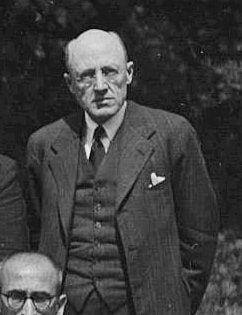
(Sir Karl Raimund Popper (1902–1994) was an Austrian and British philosopher and sociologist, one of the most influential philosophers of the twentieth century. He founded the philosophical doctrine of critical rationalism. He described his own position as follows: “I may be wrong and you may be right, and by an effort, we may get nearer to the truth”.)